



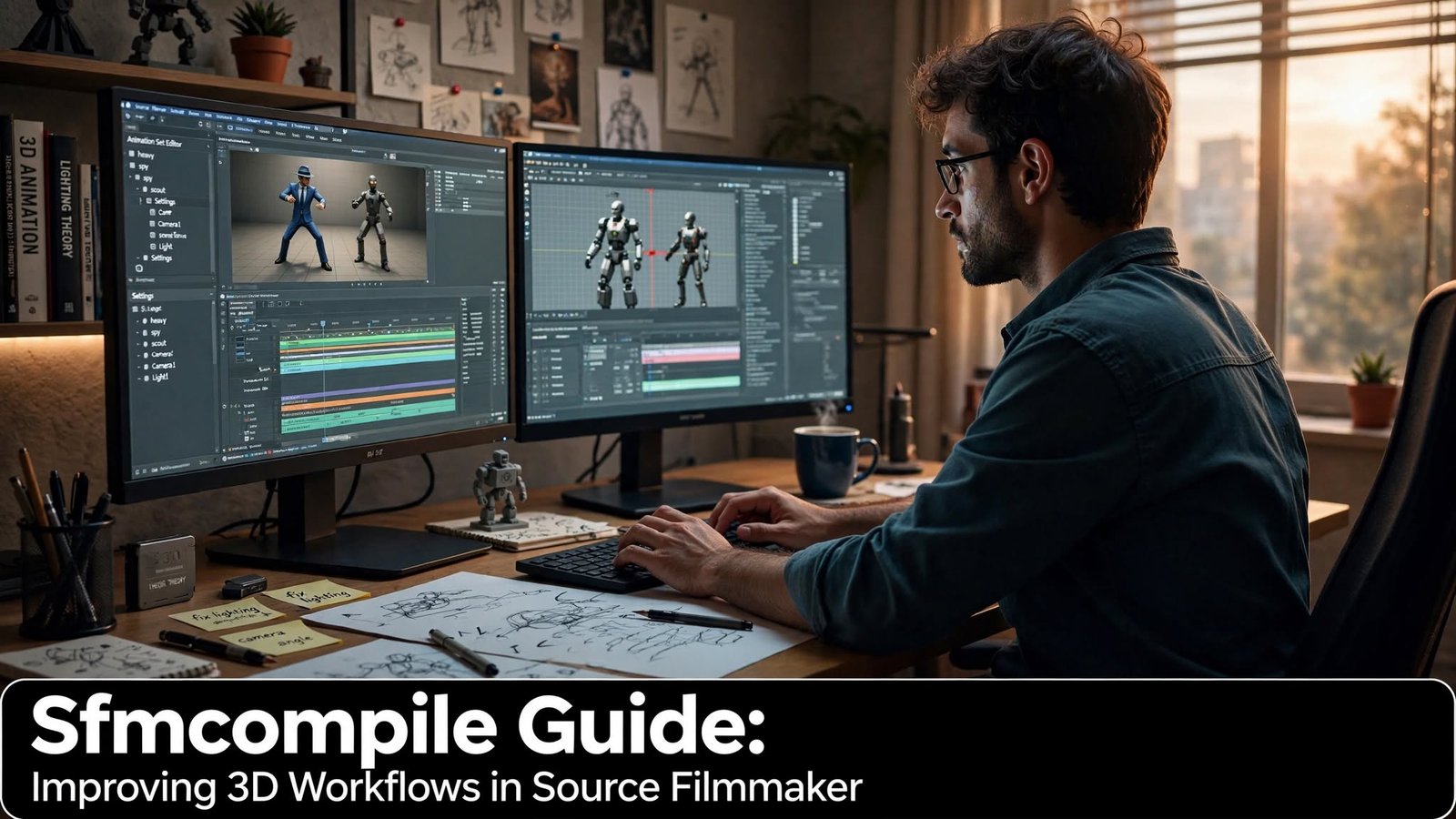
Source Filmmaker, commonly known as SFM, is a 3D filmmaking and animation tool developed by Valve. It allows creators to build animated scenes using characters, props, environments, lighting, cameras, and other assets within a Source-engine-based environment.
For creators working with custom models and 3D assets, understanding compilation and asset preparation can make the overall workflow more organized and reliable. The term Sfmcompile is often associated with the technical processes involved in preparing assets so they can work properly within Source Filmmaker.
A successful SFM project involves more than simply importing a model. Models, textures, materials, skeletons, animations, and configuration files need to work together correctly.
By understanding how these components interact, creators can spend less time troubleshooting technical problems and more time developing scenes, animations, and cinematic ideas.
What Is Sfmcompile?
Sfmcompile can be understood as a term connected with compiling and preparing 3D assets for Source Filmmaker workflows. In a broader technical sense, compilation converts appropriately prepared source files into formats that a game engine or related application can use.
For SFM creators, this process can be particularly important when working with custom models rather than assets that are already included with the software.
A custom character, prop, or environment may begin as a collection of files created in a 3D modeling application. Before the asset can function correctly inside SFM, it may require proper model configuration, textures, materials, rigging, and other supporting information.
Understanding this process gives creators a clearer picture of what happens between creating a 3D asset and using it inside an animated scene.
Understanding the Source Filmmaker Workflow
Source Filmmaker combines several stages of digital filmmaking into one environment. Instead of creating a model in one application and completing all animation separately, users can bring compatible assets into an SFM scene and manipulate them within a virtual filmmaking environment.
A typical workflow can involve selecting or creating assets, preparing them for the Source engine, importing them into SFM, arranging the scene, animating characters, positioning cameras, adjusting lighting, and rendering the finished sequence.
Each stage affects the next. A problem with an asset’s structure can affect animation, while incorrect materials can affect the appearance of an otherwise well-designed scene.
This is why a structured workflow is valuable for both beginners and experienced SFM creators.
Preparing 3D Models for SFM
3D models are the foundation of many SFM projects. They can represent characters, buildings, furniture, vehicles, creatures, weapons, or everyday objects.
A model created in software such as Blender, Maya, or 3ds Max may not automatically be ready for use in Source Filmmaker. It may need to be exported, configured, and compiled according to the requirements of the Source engine.
The model’s geometry should be properly organized before the compilation stage. Problems with geometry, scale, orientation, or object structure can create additional issues once the asset is loaded into SFM.
Taking time to check a model before compilation can therefore prevent unnecessary troubleshooting later.
Textures and Materials
Textures provide visual information that gives a 3D model its appearance. They can define colors, patterns, surface details, and other visual characteristics.
Materials determine how those textures are interpreted and displayed by the engine. Depending on the material configuration, a surface can appear smooth, rough, transparent, reflective, or otherwise visually distinct.
Incorrect texture paths are a common source of problems in custom asset workflows. When the application cannot locate the required texture files, the model may appear with missing or incorrect textures.
Keeping texture files organized and using consistent paths can make the workflow considerably easier to manage.
The Importance of Model Compilation
Model compilation connects the source asset with the format expected by the Source engine. During this process, relevant configuration information can define how the model, materials, skeleton, animations, and other components should be handled.
The exact compilation process depends on the asset and the Source-engine tools being used. Different types of models can have different requirements.
For example, a static prop may have relatively simple requirements, while a fully animated character can require a skeleton, bone hierarchy, weight information, facial controls, and animation data.
Understanding these differences helps creators choose an appropriate workflow for each type of asset.
Rigging and Skeletons
Rigging is particularly important when creating animated characters. A rig provides a structure of bones that allows an animator to control different parts of a model.
The relationship between the model’s geometry and its bones is also important. Weight information determines how the geometry responds when individual bones move.
If the rig is configured correctly, an animator can create natural poses and movements inside SFM. If it is configured incorrectly, the model may stretch, twist, or deform in unexpected ways.
Good rigging therefore provides the foundation for effective character animation.
Animation in Source Filmmaker
Once a compatible character is available, SFM provides tools for creating and editing animation. Creators can manipulate poses, movements, facial expressions, and other aspects of a character’s performance.
Animation can begin with a simple pose and gradually become more detailed. An animator might first establish the major movements before refining hand positions, facial expressions, body language, and timing.
This process is similar to many other animation workflows in which broad movements are established first and smaller details are added during later stages.
The quality of the final result depends not only on technical setup but also on timing, composition, and the animator’s creative decisions.
Camera Setup and Cinematic Composition
A strong 3D workflow should also consider cinematography. Source Filmmaker provides virtual cameras that allow creators to frame characters and environments from different perspectives.
Camera position, angle, distance, and field of view can significantly affect how viewers perceive a scene. A close shot can emphasize a character’s expression, while a wider shot can establish the environment.
Creators can experiment with multiple camera positions before deciding how a sequence should be presented.
Good camera planning can also reduce unnecessary animation work because characters and objects only need to be animated in ways that support the final shots.
Lighting in SFM Projects
Lighting is another important component of a cinematic SFM workflow. It influences visibility, atmosphere, depth, and the overall visual character of a scene.
Creators can position lights around characters and environments to highlight important areas or create particular moods. Different lighting arrangements can produce dramatically different results from the same 3D environment.
Lighting should also be considered alongside materials and textures. A material that looks appropriate under one lighting setup may appear very different under another.
Experimentation is often an important part of developing a visually consistent scene.
Organizing SFM Assets
Large SFM projects can involve many different files. Models, textures, materials, animations, maps, sounds, and other resources can quickly become difficult to manage without an organized structure.
Using consistent names for assets can make them easier to identify. Separating different categories of resources can also help creators locate files when troubleshooting.
Organization becomes especially valuable when a project contains custom assets from several different sources.
A clean workflow can reduce confusion and make it easier to reuse assets in future projects.
Troubleshooting Common Compilation Problems
Custom SFM assets can sometimes fail to work as expected. One common problem is missing textures, which can cause models to display incorrectly.
Other issues can involve incorrect file paths, incompatible model configurations, improperly prepared skeletons, or missing supporting files.
Animation problems may appear when a model’s bones or weights have not been configured correctly. A character might load successfully but behave incorrectly when its controls are manipulated.
The most effective troubleshooting approach is usually systematic. Checking the model, textures, materials, skeleton, file paths, and compilation configuration individually can help identify where a problem originates.
Improving Efficiency in a 3D Workflow
Efficiency is not only about working faster. It also involves reducing repetitive tasks and preventing avoidable problems.
Creators can improve their workflow by testing assets individually before adding them to large projects. If a model works correctly on its own, it becomes easier to determine whether a later problem comes from the scene rather than the asset.
Keeping reusable resources organized can also reduce preparation time for future projects. A properly prepared model can potentially be reused across multiple scenes without repeating the entire setup process.
Creating backups is another important practice. Animation projects can represent many hours of creative work, so maintaining copies of important files can protect against accidental loss or corruption.
Using External 3D Software With SFM
Source Filmmaker is primarily a filmmaking and animation environment, but creators may use other applications when developing custom assets.
A 3D modeling application can be used to create or modify geometry. Image-editing software can help prepare textures, while specialized tools can assist with animation or asset conversion.
The important consideration is compatibility between each stage of the workflow. An asset created externally must eventually be prepared in a way that the Source-engine environment can understand.
This makes file formats, naming conventions, material paths, and model configuration important parts of the overall pipeline.
Sfmcompile and Custom Content Creation
Custom content is one of the areas where compilation knowledge becomes particularly useful. Instead of relying entirely on existing SFM assets, creators can develop their own characters, props, environments, and other resources.
This opens up more creative possibilities because the creator is no longer restricted to a predefined collection of models.
However, custom content also introduces additional technical responsibilities. The creator must consider geometry, textures, materials, rigging, animation, compatibility, and file organization.
A reliable compilation workflow can help turn these individual components into usable SFM assets.
Building Better SFM Projects
Improving an SFM workflow involves both technical and creative development. Technical preparation ensures that assets load and behave correctly, while creative planning determines how those assets are used in the final production.
Creators can begin by developing a clear understanding of their project’s requirements. Knowing which characters, props, environments, cameras, and effects are needed can help reduce unnecessary preparation.
It is also useful to test scenes progressively. Building a small section first can reveal technical problems before they become embedded throughout a much larger project.
This approach can make complex productions easier to manage.
SFM as a Learning Tool for 3D Filmmaking
Working with Source Filmmaker can introduce creators to many fundamental concepts used throughout 3D production. These include modeling, texturing, rigging, animation, lighting, camera composition, rendering, and asset management.
The experience can also demonstrate how different departments or stages of a 3D pipeline depend on one another.
For example, animation depends on properly prepared rigs, while visual quality depends partly on materials, textures, lighting, and rendering settings.
Learning how these components interact can provide a useful foundation for creators who later explore other 3D applications and real-time engines.
Future-Proofing Your Workflow
Technology and software tools change over time, but organized production practices remain useful. Maintaining clean project structures, documenting custom assets, and keeping original source files can make future modifications easier.
Creators should also understand which parts of their workflow depend specifically on Source Filmmaker or the Source engine. This distinction can help when adapting assets for another platform.
Keeping original models, textures, and configuration files separate from compiled versions can be especially useful when an asset needs to be updated or converted.
A flexible workflow makes it easier to experiment with new tools without losing control of existing projects.
Conclusion
Sfmcompile is best understood within the broader context of preparing and compiling 3D assets for Source Filmmaker workflows. Models, textures, materials, skeletons, animations, and configuration files all play important roles in creating functional SFM content.
A well-planned workflow can make custom asset creation more manageable while reducing common problems related to missing files, incorrect materials, incompatible models, and animation issues.
For creators interested in improving their Source Filmmaker projects, learning the principles behind asset preparation and compilation is a valuable step. Combined with good animation, lighting, camera work, and scene organization, these technical skills can help transform individual 3D assets into polished cinematic productions.
