



Hachikō is remembered as one of the most loyal dogs in history, a Japanese Akita whose devotion to his owner became a symbol of love, patience, and faithfulness. His story has touched millions of people around the world and continues to inspire readers, animal lovers, and visitors to Japan.
What makes Hachikō’s story so remarkable is that it is based on real events. Even after his owner died unexpectedly, Hachikō continued returning to the railway station where he had once waited for him, creating a powerful story of loyalty that Japan has never forgotten.
Who Was Hachikō?
Hachikō was a male Akita dog born on November 10, 1923, in Odate, Akita Prefecture, Japan. The Akita is a Japanese dog breed known for its strength, intelligence, independence, and deep attachment to its family.
Hachikō became famous because of his extraordinary relationship with his owner, Hidesaburō Ueno, a professor at the University of Tokyo. Their daily routine was simple, but it eventually became the foundation of one of the world’s best-known true stories about the bond between humans and animals.
The name Hachikō is often associated with the Japanese word hachi, meaning eight. The suffix -kō is an affectionate way of referring to someone, and the name became permanently connected with loyalty and devotion in Japanese culture.
Hachikō and His Owner, Hidesaburō Ueno
In 1924, Professor Hidesaburō Ueno adopted Hachikō when the dog was still a young puppy. Ueno lived in Tokyo and worked as an agricultural scientist and professor, and he developed a close relationship with his new companion.
Hachikō would accompany his owner to Shibuya Station, where Ueno boarded the train for work. Later in the day, the dog would return to the station to meet him when he came home.
This daily routine gradually became a familiar sight for people in the neighborhood. Hachikō’s presence at the station was not simply a habit; it reflected the close relationship he shared with the person who cared for him.
The Tragic Day That Changed Hachikō’s Life
On May 21, 1925, Professor Ueno suffered a fatal cerebral hemorrhage while at work and never returned home. His sudden death meant that Hachikō would never again see the owner he had grown accustomed to welcoming at the station.
For a dog whose daily life had revolved around his owner’s schedule, the loss marked a dramatic change. Hachikō was subsequently cared for by other people, but the bond he had formed with Ueno remained at the center of his story.
In the days and months that followed, Hachikō continued returning to Shibuya Station. He appeared to wait for the familiar arrival that would never happen, turning an ordinary railway platform into a place associated with enduring devotion.
Why Did Hachikō Wait at Shibuya Station?
Hachikō became known for returning to Shibuya Station repeatedly after Professor Ueno’s death. He continued this behavior for years, and his presence eventually attracted the attention of commuters, railway workers, and local residents.
Although people cannot know exactly what Hachikō understood or felt, his repeated visits became a powerful symbol of the attachment dogs can form with their human companions. His story is often interpreted as an example of a dog’s enduring connection to someone who has been part of its everyday life.
Hachikō’s story also reminds us that animals can experience changes in their routines and relationships in ways that deserve patience and compassion. His actions inspired people to think more deeply about the emotional lives of animals and the responsibilities involved in caring for them.
How Japan Discovered Hachikō’s Story
For several years, Hachikō’s repeated visits to the station were mainly noticed by people who lived or worked nearby. His story reached a much wider audience in 1932, when a newspaper article brought national attention to the loyal dog.
The publicity transformed Hachikō into a familiar figure throughout Japan. People became interested in his story, and many began visiting Shibuya Station to see him or learn more about the dog who continued waiting for his deceased owner.
Hachikō’s growing fame helped turn his personal story into a wider cultural symbol. His devotion came to represent loyalty, perseverance, and the lasting emotional connection between people and animals.
The Hachikō Statue at Shibuya Station
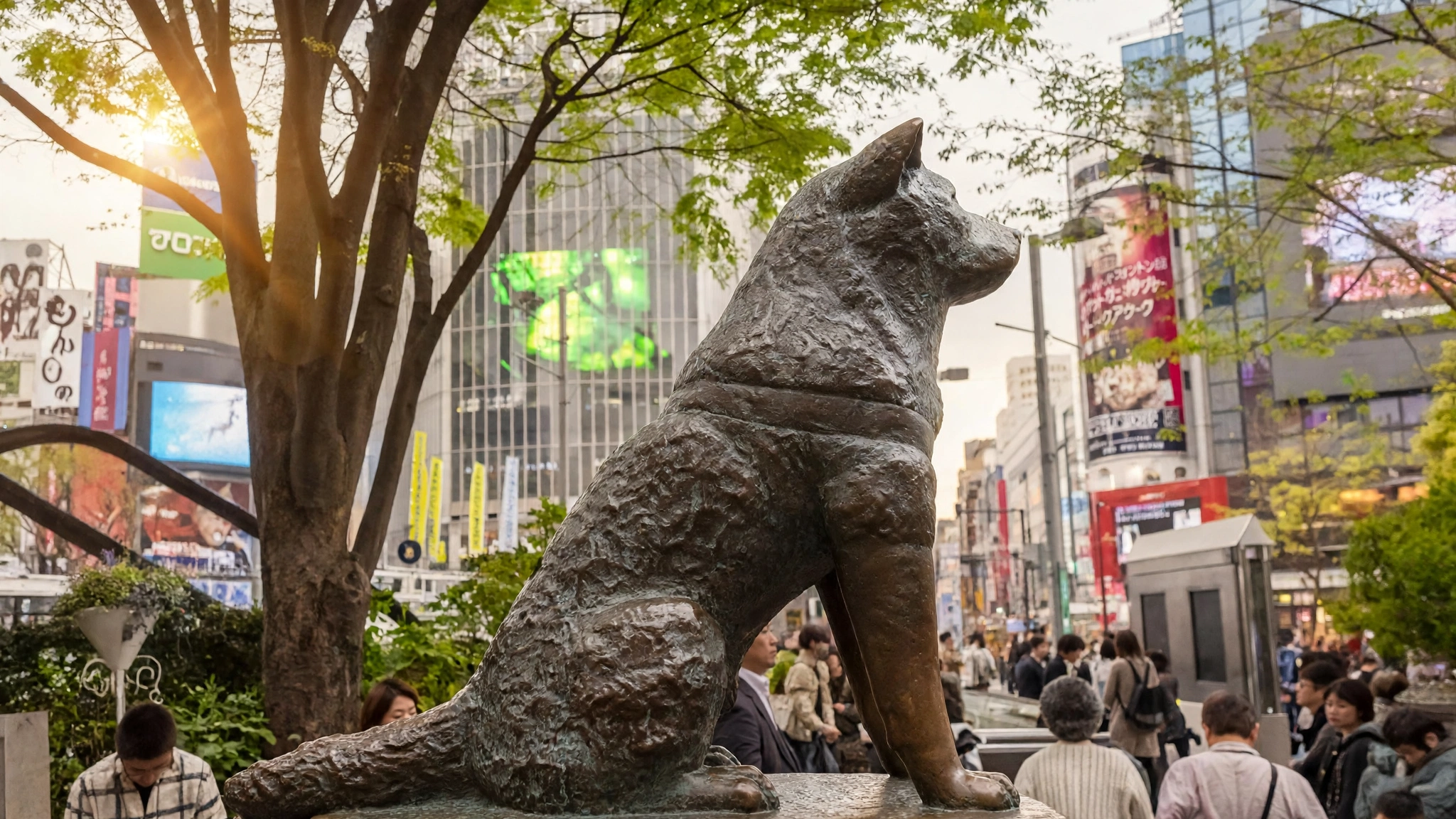
One of the most recognizable reminders of Hachikō is the bronze statue near Shibuya Station in Tokyo. The original statue was unveiled in 1934 while Hachikō was still alive, allowing people to honor him during his lifetime.
The original monument was later removed during World War II, when its metal was needed for the war effort. A replacement statue was installed in 1948, and it remains a famous landmark and meeting point near the station.
Today, the Hachikō statue attracts visitors from Japan and many other countries. For tourists, it is a place to learn about the dog behind the legend, while for local residents it is also a familiar spot to meet friends and begin exploring the busy Shibuya district.
When Did Hachikō Die?
Hachikō died on March 8, 1935, at approximately eleven years of age. He was found in the Shibuya area, ending the remarkable chapter of his life that had captured the public’s attention.
His death brought sadness to people who had followed his story and admired his loyalty. Reports of his passing spread widely, and his memory continued to grow long after he was gone.
Hachikō’s remains were preserved in part: his taxidermied body is displayed at the National Museum of Nature and Science in Tokyo. His remains were also cremated, and his ashes were buried beside those of Professor Ueno at Aoyama Cemetery, allowing the two to be commemorated together.
What Made Hachikō So Special?
Hachikō was not famous for performing extraordinary tricks or accomplishing a remarkable task. Instead, he became a lasting symbol because of a simple behavior that continued long after the circumstances of his life had changed.
His story highlights the powerful place that companionship can hold in an animal’s life. For many people, Hachikō represents the idea that a relationship can leave a lasting impression even after one member of that relationship is gone.
His legacy also encourages responsible pet ownership. Dogs depend on people for food, shelter, safety, companionship, and care, and Hachikō’s story reminds us to treat that relationship with kindness and respect.
Hachikō in Movies and Popular Culture
Hachikō’s story has inspired books, documentaries, television programs, and films. One of the best-known adaptations is the 2009 movie Hachi: A Dog’s Tale, starring Richard Gere, which introduced the story to many viewers around the world.
The film moves the story to the United States and changes some details, but it preserves the central theme of a dog who continues waiting for his beloved owner. The Japanese film Hachikō Monogatari, released in 1987, also helped bring the story to a broad audience.
These adaptations have made Hachikō recognizable to people who may never have visited Japan. Although movies sometimes change historical details for storytelling purposes, the real Hachikō remains the foundation of the legend.
Is the Story of Hachikō True?
Yes, Hachikō was a real dog, and the main events of his story are documented in Japanese history. He was born in 1923, belonged to Professor Hidesaburō Ueno, and continued visiting Shibuya Station after Ueno’s death in 1925.
The story is sometimes presented in highly emotional terms, especially in films and online retellings. However, the exact thoughts and feelings of Hachikō cannot be established with certainty, so it is important to distinguish the documented events from interpretations of his behavior.
What remains clear is that his repeated presence at the station attracted widespread attention and became an enduring example of loyalty. The historical record, the statue at Shibuya, and the continued remembrance of Hachikō all demonstrate how deeply his story has resonated with people.
Lessons We Can Learn from Hachikō
Hachikō’s story encourages us to appreciate the relationships we share with animals and the people who bring meaning to our lives. It reminds us that loyalty is often expressed through ordinary actions, familiar routines, and a consistent presence rather than grand gestures.
His life also highlights the importance of compassion toward animals. Pets may rely on routines and close relationships, and they deserve patient, responsible care throughout their lives, especially when their circumstances change.
Perhaps the most lasting lesson is that kindness can create memories that outlive the moment in which they began. Hachikō became famous because people saw something deeply meaningful in his behavior, and his story continues to encourage empathy across generations and cultures.
Conclusion: Why the World Still Remembers Hachikō
Hachikō was much more than a dog who waited at a railway station. He became an international symbol of devotion after continuing to return to Shibuya Station following the death of Professor Hidesaburō Ueno.
His story has survived for more than a century because it speaks to a universal human feeling: the desire to remain connected to those we love. Through his statue, historical accounts, museums, and films, Hachikō continues to remind the world of the special bond that can exist between humans and animals.
Even today, Hachikō’s name represents faithfulness, patience, and enduring companionship. His remarkable life remains a moving reminder that the love shared between a person and a dog can leave a lasting mark on the world
