



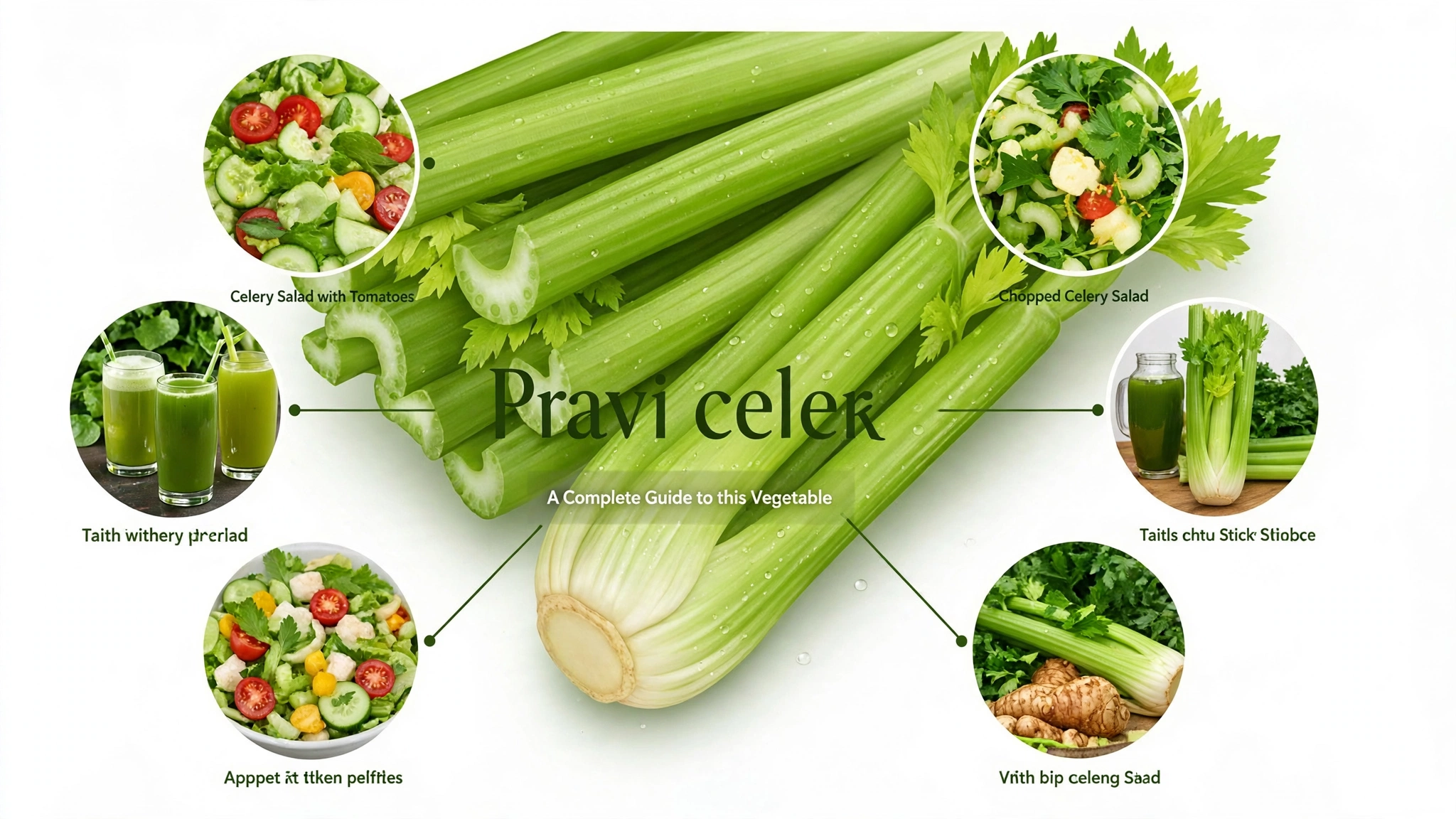
Pravi Celer is a phrase that may appear unfamiliar to many English-speaking readers, but its meaning becomes easier to understand when the words are translated. In South Slavic languages, “pravi” can mean “true,” “real,” or “genuine,” while “celer” refers to celery.
As a result, Pravi Celer can generally be understood as “true celery” or genuine celery, although the precise meaning may depend on the context in which the phrase is used. It may appear in food descriptions, recipes, gardening information, regional-language content, or discussions about plants.
Celery itself is a widely used vegetable known for its crisp stalks, distinctive flavor, and versatility. It can be eaten raw, cooked into savory dishes, used in soups and stocks, or incorporated into juices and salads.
Understanding Pravi Celer is therefore not only a matter of translation. It also provides an opportunity to explore celery, its different forms, culinary applications, nutritional characteristics, and potential benefits as part of a balanced diet.
What Does Pravi Celer Mean?
The simplest translation of Pravi Celer is “true celery.” The word “pravi” is associated with something genuine, actual, or true, while “celer” is the regional term for celery.
In everyday food-related contexts, the phrase does not necessarily indicate a rare or completely different plant. Instead, it can be used to identify genuine celery or distinguish it from related plants, substitutes, flavorings, or other ingredients.
Celery is scientifically known as Apium graveolens and belongs to the Apiaceae family. This botanical family also includes familiar plants such as carrots, parsley, fennel, coriander, and parsnips.
Because common plant names differ between languages and regions, understanding the context is important when interpreting expressions such as Pravi Celer.
What Is True Celery?
True celery refers to celery belonging to the species Apium graveolens. The plant has been cultivated in different forms for food and culinary purposes, with particular varieties developed for their stalks, leaves, roots, or seeds.
The celery commonly found in supermarkets is usually cultivated for its long, crisp stalks. These stalks have a mild, fresh flavor and are often used as a base ingredient in soups, salads, sauces, and other recipes.
Celery plants also produce leaves that are edible and flavorful. In addition, celery seeds are used as a seasoning, while certain cultivated forms are grown primarily for their enlarged root, commonly known as celeriac.
This variety of uses explains why celery can appear in many different culinary traditions.
The History and Background of Celery
Celery has a long history of human use, with wild forms associated with regions of Europe, Asia, and the Mediterranean. Over time, people selected and cultivated different forms of the plant for culinary and agricultural purposes.
Early celery was not necessarily identical to the large, crisp-stalked vegetable commonly sold today. Modern cultivation has produced varieties with characteristics specifically suited to different culinary uses.
Today, celery is grown and consumed in many parts of the world. It has become a familiar ingredient in home cooking, commercial food production, salads, soups, stocks, sauces, and seasoning products.
The history of celery also demonstrates how familiar vegetables can develop through centuries of cultivation and selection.
Different Types and Forms of Celery
Celery is not limited to the familiar green stalks found in grocery stores. The plant can be cultivated in different forms, each offering distinctive characteristics and culinary applications.
Stalk celery is the most recognizable type. It is valued for its crisp texture and is commonly eaten raw or cooked.
Celeriac, often called celery root, is another form of Apium graveolens. Instead of being cultivated mainly for long stalks, celeriac is grown for its enlarged underground portion.
Celeriac has a rough exterior and a creamy interior. It has a flavor that combines celery-like notes with earthy characteristics and can be roasted, boiled, mashed, or added to soups.
Celery leaves are also useful in cooking. Their flavor can be stronger than the stalks, making them suitable for soups, sauces, salads, and garnishes.
Celery seeds provide another concentrated form of celery flavor. They are used in certain spice blends, pickling preparations, dressings, and savory recipes.
How Pravi Celer Is Used in Cooking
Celery is particularly valuable in cooking because it can contribute both texture and aroma. Fresh stalks can be sliced or chopped and added to salads, sandwiches, wraps, and snack plates.
When cooked, celery becomes softer while contributing a subtle savory flavor. It is frequently combined with onions and carrots to create a flavorful foundation for soups, stews, stocks, and sauces.
Celery can also be paired with meat, poultry, seafood, beans, potatoes, tomatoes, and many other vegetables. Its relatively mild flavor allows it to complement stronger ingredients without dominating the finished dish.
Celery leaves can be chopped and incorporated into dishes in much the same way as fresh herbs. Using the leaves can also help reduce food waste because more of the plant becomes part of the meal.
Nutritional Value of Celery
Celery is generally considered a low-calorie vegetable with a high water content. It also provides dietary fiber and smaller amounts of several vitamins and minerals.
The nutritional composition of celery makes it a convenient addition to meals focused on vegetables and minimally processed foods. Its high water content also contributes to its characteristic crisp and refreshing texture.
Celery contains naturally occurring plant compounds as well. Like many vegetables, it provides a mixture of phytochemicals that contribute to the overall nutritional value of a varied diet.
However, celery should not be viewed as a substitute for a balanced eating pattern. Its benefits are best considered as part of an overall diet containing a broad range of vegetables, fruits, whole grains, legumes, nuts, seeds, and other nutritious foods.
Potential Benefits of Eating Celery
One of the main benefits of celery is that it can contribute to overall vegetable intake while adding relatively few calories. This makes it a useful ingredient for people looking to include more vegetables in everyday meals.
The vegetable’s water and fiber content can also contribute to a satisfying eating experience. When combined with other nutritious foods, celery can work well as part of a balanced snack or meal.
Celery also contains naturally occurring antioxidant compounds. Antioxidants are substances that help protect cells from oxidative processes, although the presence of these compounds does not mean that celery alone can prevent or treat disease.
Another practical advantage is its versatility. Because celery can be eaten raw, cooked, chopped, blended, or used as a seasoning, it is easy to incorporate into different dietary patterns.
Celery and Digestive Health
Celery contains dietary fiber, which is an important component of a healthy diet. Adequate fiber intake supports normal digestive function and contributes to overall dietary quality.
Adding vegetables such as celery to meals can therefore help people increase their overall fiber consumption. However, the amount of fiber obtained from a typical serving of celery is only one part of total daily intake.
For optimal digestive health, it is generally more useful to consume fiber from a variety of foods rather than relying heavily on one vegetable.
People who are increasing their fiber intake should also consider doing so gradually and maintaining adequate fluid intake.
Celery and Hydration
Celery contains a substantial amount of water, which contributes to its crisp texture and refreshing quality. Eating water-rich vegetables can contribute to overall fluid intake.
However, celery should not be considered a replacement for drinking water. The body’s hydration needs are best supported through regular consumption of appropriate fluids along with water-rich foods.
The high water content does make celery particularly popular in salads, fresh snacks, and vegetable-based drinks.
Celery in a Balanced Diet
Celery can fit into many different dietary patterns because it is versatile and relatively easy to prepare. It can be paired with protein-rich foods, whole grains, legumes, fruits, and other vegetables to create more complete meals.
For example, chopped celery can be incorporated into a vegetable soup, while raw celery can be served with a nutritious dip. It can also be included in salads or cooked as part of a larger vegetable mixture.
The important point is that celery works best as one component of a varied diet. No individual vegetable provides every nutrient the body needs.
How to Choose Fresh Celery
When selecting celery, look for stalks that appear firm, crisp, and reasonably fresh. The stalks should not feel excessively soft or slimy.
The leaves can also provide clues about freshness. Fresh-looking leaves and firm stalks are generally preferable when buying celery for raw dishes.
Some variation in size and color is normal, and the best choice can depend on how the celery will be used. Crisp stalks may be particularly desirable for salads and snacks, while appearance may be less important when celery is destined for soup or stock.
Celery should be discarded if it shows obvious signs of spoilage such as mold, strong unpleasant odors, or a slimy texture.
How to Store Celery Properly
Fresh celery is generally best stored in the refrigerator. Keeping it protected from excessive moisture loss can help preserve its crisp texture.
Over time, celery may become limp as it loses water. If the vegetable is otherwise fresh and free from signs of spoilage, soaking it in cold water can sometimes help restore some of its firmness.
Proper storage can extend the useful life of celery and make it easier to keep the vegetable available for everyday cooking.
Pravi Celer vs. Celery Root
A common source of confusion is whether Pravi Celer means celery root. In general, the phrase “true celery” should not automatically be treated as another name for celeriac.
Celeriac is a specific cultivated form of Apium graveolens that is grown primarily for its enlarged underground portion. Stalk celery, meanwhile, is cultivated mainly for its long edible leaf stalks.
Both are related and belong to the same species, but they look and taste different and are used differently in cooking.
Therefore, when encountering the phrase Pravi Celer, it is useful to examine the surrounding information before deciding whether the reference is to stalk celery, celeriac, celery leaves, or another form.
Possible Allergies and Dietary Considerations
Although celery is a common vegetable, some people can experience an allergic reaction to it. Celery allergy is a recognized food allergy and can be relevant when eating processed foods or dishes prepared outside the home.
Celery can appear in soups, stocks, sauces, spice mixtures, prepared meals, and other foods where its presence may not be immediately obvious.
Anyone with a known celery allergy should carefully review ingredient information and communicate their allergy when eating food prepared by others.
People with questions about suspected food allergies should seek guidance from an appropriately qualified healthcare professional rather than relying solely on general dietary information.
Common Misconceptions About Pravi Celer
One misconception is that Pravi Celer must refer to a mysterious or newly discovered vegetable. In many contexts, the phrase simply relates to the concept of “true” or genuine celery.
Another misconception is that celery has extraordinary medicinal properties. Although celery is nutritious and contains various plant compounds, eating celery should not be presented as a treatment or cure for medical conditions.
It is also important to distinguish nutritional benefits from health claims. A food can be nutritious and useful in a balanced diet without having the ability to independently prevent or cure a particular disease.
Why Pravi Celer Is Worth Knowing
The phrase Pravi Celer offers an interesting example of how food terminology can vary between languages. What appears to be an unusual phrase to an English-speaking reader may simply describe a familiar ingredient.
Learning the meaning can be particularly useful when reading regional recipes, food websites, gardening information, or translated culinary content.
It also highlights the diversity of celery itself. From stalks and leaves to seeds and celeriac, different parts and forms of the plant have different culinary purposes.
Final Thoughts
Pravi Celer generally means “true celery” or genuine celery, with the exact interpretation depending on the linguistic and culinary context. It is associated with celery, a versatile plant scientifically known as Apium graveolens.
Celery can contribute flavor, crunch, water, fiber, and various plant compounds to the diet. Its stalks can be eaten raw or cooked, its leaves can add flavor to recipes, and its seeds can be used as a seasoning.
The potential benefits of celery are best understood as part of a balanced diet rather than as evidence of extraordinary medicinal effects. For anyone researching Pravi Celer, the most important takeaway is that the phrase generally connects to genuine celery and its many culinary uses.
Whether used in soups, salads, stocks, snacks, sauces, or traditional recipes, celery remains a practical and adaptable ingredient found across many food cultures.
