



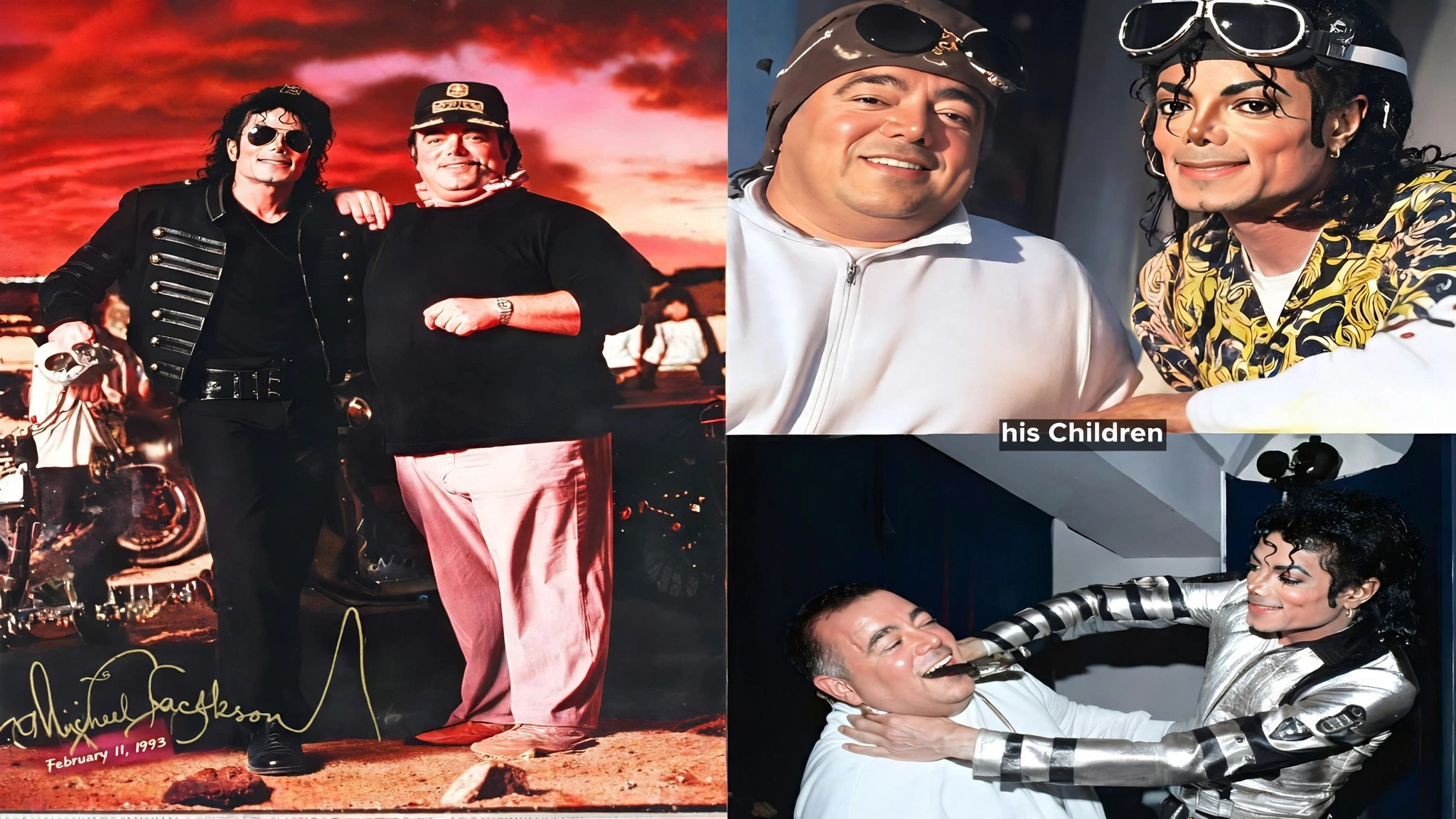
Frank DiLeo was one of the most recognizable behind-the-scenes figures in Michael Jackson’s career. A music-industry executive with a reputation for aggressive promotion and sharp business instincts, DiLeo became Jackson’s manager during the extraordinary period that followed the success of Thriller.
His career was built long before he became associated with the King of Pop. From record promotion and label management to artist representation and entertainment projects, DiLeo developed the experience that eventually helped him become one of the most important figures surrounding Jackson during the 1980s.
Who Was Frank DiLeo?
Frank Michael DiLeo was born on October 23, 1947, in Pittsburgh, Pennsylvania. He entered the music business while still young and eventually built a reputation as a skilled record promoter and music executive.
DiLeo worked with several record companies before returning to Epic Records, where he became vice president of national promotion. His ability to promote records and understand the commercial side of the music industry eventually brought him into close contact with Michael Jackson.
Although audiences later recognized him primarily as Jackson’s manager, DiLeo was an established music-business professional before taking that position. His knowledge of radio promotion, record sales, artists, and industry relationships gave him a valuable understanding of how to turn successful music into major commercial events.
Frank DiLeo’s Early Career in the Music Business
DiLeo began his professional career in the late 1960s, initially working in record sales and distribution. In 1968, he joined Epic Records’ promotion operation and worked to get records played by radio stations.
During this period, he promoted music from artists including The Hollies, Donovan, and Sly & the Family Stone. He later worked with other companies, including RCA and Bell Records, before returning to Epic in 1979.
His return to Epic marked an important turning point. As vice president of national promotion, DiLeo became responsible for a large promotional operation and worked with a roster that included major artists such as Ozzy Osbourne, Culture Club, Gloria Estefan, Cyndi Lauper, REO Speedwagon, and Luther Vandross.
These experiences helped establish DiLeo as a powerful figure within the record industry. More importantly, they prepared him for his eventual partnership with Michael Jackson.
Frank DiLeo and the Thriller Era
DiLeo’s relationship with Michael Jackson became especially important during the promotion of Thriller. Released in 1982, the album rapidly developed into a global phenomenon and ultimately became one of the most influential and commercially successful albums in popular music history.
As Epic’s promotion executive, DiLeo helped create the promotional strategy surrounding Jackson’s singles. His understanding of radio, marketing, and the changing importance of music videos allowed him to approach the album as a continuing campaign rather than a single release.
One of the most famous examples of his strategy involved “Billie Jean” and “Beat It.” According to Jackson’s own account in Moonwalk, DiLeo supported releasing “Beat It” while “Billie Jean” was still performing strongly, despite concerns that the second single could weaken the first.
The strategy proved successful, with both songs achieving enormous popularity. Jackson later credited DiLeo’s understanding of the recording industry as an important factor in turning his vision for Thriller into reality.
How Frank DiLeo Became Michael Jackson’s Manager
In March 1984, Michael Jackson asked DiLeo to become his manager. At the time, Jackson’s career was experiencing extraordinary momentum following the success of Thriller.
DiLeo had initially been a record executive rather than a traditional artist manager, and contemporary accounts indicate that he considered the decision carefully. Jackson nevertheless wanted someone who understood the record business and could help manage the rapidly expanding demands of his career.
The partnership officially placed DiLeo at the center of Jackson’s professional operation. His job was no longer simply to promote Jackson’s records; he now had to help oversee a global entertainment career involving recordings, tours, films, endorsements, media appearances, and business negotiations.
The Management Style That Defined DiLeo
Frank DiLeo was known for a direct, energetic, and highly business-oriented personality. His approach was different from the polished public image associated with Michael Jackson.
DiLeo understood the importance of making Jackson’s projects feel larger than ordinary entertainment releases. In a 1988 interview, he described his philosophy in terms of creating something “bigger than life,” reflecting his belief that Jackson’s career needed to be managed on a global scale.
He also recognized that Jackson needed room to concentrate on his creative work. His role was to handle many of the commercial and logistical demands surrounding the singer so that Jackson could focus more heavily on music and performance.
Frank DiLeo and the Victory Tour
One of DiLeo’s major responsibilities was helping manage the Victory Tour, which brought Michael Jackson together with his brothers as the Jacksons.
The tour followed the phenomenal success of Thriller and represented an enormous commercial undertaking. Jackson was already one of the biggest stars in the world, while the involvement of his brothers added another layer of public and business attention.
DiLeo’s experience with large-scale music promotion was particularly useful during this period. Managing an international superstar required coordination between record companies, promoters, sponsors, media organizations, venues, and the artist’s personal team.
Frank DiLeo and the Bad Era
DiLeo remained Michael Jackson’s manager as the singer entered the next major phase of his career with the Bad album. Released in 1987, Bad continued Jackson’s extraordinary run of international success.
The subsequent Bad World Tour became a major global event, beginning in Tokyo in September 1987 and eventually traveling across several countries. DiLeo helped oversee the tour and its international promotional strategy.
The scale of the Bad campaign demonstrated how Jackson’s career had evolved. He was no longer simply promoting individual records; albums, music videos, tours, television appearances, and commercial partnerships were increasingly being treated as parts of one worldwide entertainment brand.
Frank DiLeo and Michael Jackson’s Pepsi Deal
One of DiLeo’s most notable business achievements was his involvement in Michael Jackson’s relationship with Pepsi. The partnership became one of the most recognizable celebrity endorsement arrangements of the 1980s.
DiLeo helped negotiate a major Pepsi agreement and worked on commercial projects involving Jackson. Contemporary accounts have described the deal as a landmark endorsement arrangement, demonstrating how effectively Jackson’s music career could be connected with major corporate brands.
The Pepsi relationship also illustrated DiLeo’s broader management philosophy. He understood that Jackson’s cultural influence extended beyond records and concerts and could be translated into major commercial opportunities.
Frank DiLeo and Moonwalker
DiLeo’s responsibilities eventually expanded into film and visual entertainment. He served as executive producer of Moonwalker, the 1988 anthology film built around Michael Jackson’s music and performances.
The project reflected the increasingly cinematic nature of Jackson’s career. Music videos had already become an important part of his artistic identity, and Moonwalker pushed that relationship between music, film, dance, and storytelling even further.
DiLeo’s work on the project demonstrated that his role as Jackson’s manager extended beyond conventional music-industry duties. He was increasingly involved in shaping the broader entertainment world surrounding the singer.
DiLeo’s Influence on Michael Jackson’s Image
Frank DiLeo understood that Michael Jackson’s success depended not only on music but also on presentation. During the 1980s, Jackson’s image became increasingly sophisticated, combining music videos, fashion, choreography, interviews, advertising, and large-scale live performances.
DiLeo helped coordinate many of the commercial elements surrounding that image. His promotional background meant that he understood how different forms of media could reinforce one another.
This approach was particularly important during an era when music television was becoming a major force in popular culture. Jackson’s visual productions could therefore help sell records, while the records could drive interest in videos, tours, and other projects.
The End of the First Jackson-DiLeo Partnership
Despite the enormous success of their collaboration, DiLeo and Jackson eventually ended their professional relationship. Their first period together lasted from 1984 until 1989.
The separation followed several years in which Jackson had experienced extraordinary commercial success. By the end of the 1980s, however, the management structure around the singer had changed, and DiLeo was replaced as his manager.
Their professional relationship had ended, but the personal connection between the two men did not disappear entirely. Years later, their paths would cross again under very different circumstances.
Frank DiLeo’s Life After Managing Michael Jackson
After leaving Jackson’s management team, DiLeo continued working in entertainment and artist management. He represented or worked with other performers and remained active within the music business.
He also became involved in acting. His most famous acting role was Tuddy Cicero in Martin Scorsese’s 1990 crime film Goodfellas. He later appeared in the Wayne’s World films as Frankie “Mr. Big” Sharp.
These acting appearances gave DiLeo another form of visibility. Although he was never primarily an actor, his distinctive personality and recognizable appearance made him effective in supporting roles, particularly as authoritative or intimidating entertainment-industry characters.
Frank DiLeo and Goodfellas
DiLeo’s appearance in Goodfellas became one of the most memorable chapters of his career outside music. His portrayal of Tuddy Cicero placed him alongside a major cast in one of Martin Scorsese’s most acclaimed films.
The role was especially fitting because DiLeo already had a larger-than-life personality and an unmistakable presence. His performance became a popular part of his public image and helped ensure that he would be remembered outside the music business as well.
His involvement with Goodfellas also demonstrated the unusual breadth of his career. DiLeo had moved from record promotion to artist management and then into recognizable film roles without completely leaving the entertainment industry behind.
Frank DiLeo and Michael Jackson’s Final Years
The relationship between DiLeo and Jackson eventually returned to the forefront. During Jackson’s 2005 legal troubles, DiLeo visited him and offered personal support.
The two men later reunited professionally in 2009, when Jackson was preparing for his planned This Is It concert series in London. Jackson again asked DiLeo to manage him.
The reunion was significant because DiLeo had been closely involved with Jackson during his most successful period. His return suggested that Jackson once again valued the experience and familiarity that had characterized their earlier partnership.
Frank DiLeo and This Is It
DiLeo was working with Jackson during preparations for the This Is It concerts when the singer died on June 25, 2009.
The concerts never took place, but the rehearsal footage later became the basis for the documentary This Is It. DiLeo remained associated with Jackson’s final professional period and was among the people who had been helping prepare for the planned comeback.
His presence during this period gave his career an unusual circular quality. The same manager who had helped guide Jackson through the Thriller and Bad eras was once again working with him near the end of his life.
Frank DiLeo’s Death
Frank DiLeo died on August 24, 2011, at the age of 63. Reports said that he died after complications related to heart surgery.
His death came just over two years after Michael Jackson’s death. The timing made DiLeo’s passing especially poignant for people who remembered the close professional relationship between the two men.
By then, DiLeo had already established a unique place in entertainment history. He was remembered not only as Michael Jackson’s manager but also as a record executive, promoter, producer, and occasional actor.
The Lasting Legacy of Frank DiLeo
Frank DiLeo’s greatest legacy is connected to his understanding of how the music industry could transform an extraordinarily talented performer into a worldwide entertainment phenomenon.
His promotional work during the Thriller era helped maximize the album’s commercial impact, while his management of Jackson during the 1980s helped coordinate the singer’s recordings, tours, films, endorsements, and international image.
DiLeo’s career also illustrates the importance of people who work behind the scenes. While Michael Jackson was the performer audiences saw on stage and screen, DiLeo was one of the professionals helping manage the enormous machinery surrounding that fame.
Why Frank DiLeo Remains Important
Frank DiLeo remains important because his career coincided with a major transformation in popular music. During the 1980s, music videos, global tours, corporate endorsements, television, and record promotion increasingly became interconnected.
DiLeo understood how to use those elements together. His work with Jackson helped demonstrate how a music career could become a much broader global entertainment enterprise.
His influence also survives through the many stories surrounding the Thriller era. Jackson himself credited DiLeo with an important role in turning his ambitions for the album into reality, making DiLeo one of the most frequently remembered behind-the-scenes figures in Jackson’s career.
Conclusion
Frank DiLeo was far more than Michael Jackson’s manager. He was an experienced record promoter who understood the commercial side of music and knew how to build momentum around major artists.
His partnership with Jackson began during the extraordinary Thriller era and continued through the Victory and Bad periods, major tours, commercial endorsements, and film projects. Their first professional partnership ended in 1989, but the two eventually reunited in 2009 as Jackson prepared for This Is It.
DiLeo’s story remains an important part of Michael Jackson’s history because it reveals the business expertise behind one of the greatest periods in popular music. His legacy is that of a determined music executive and manager who helped turn Jackson’s extraordinary artistic talent into an even larger global phenomenon.
