



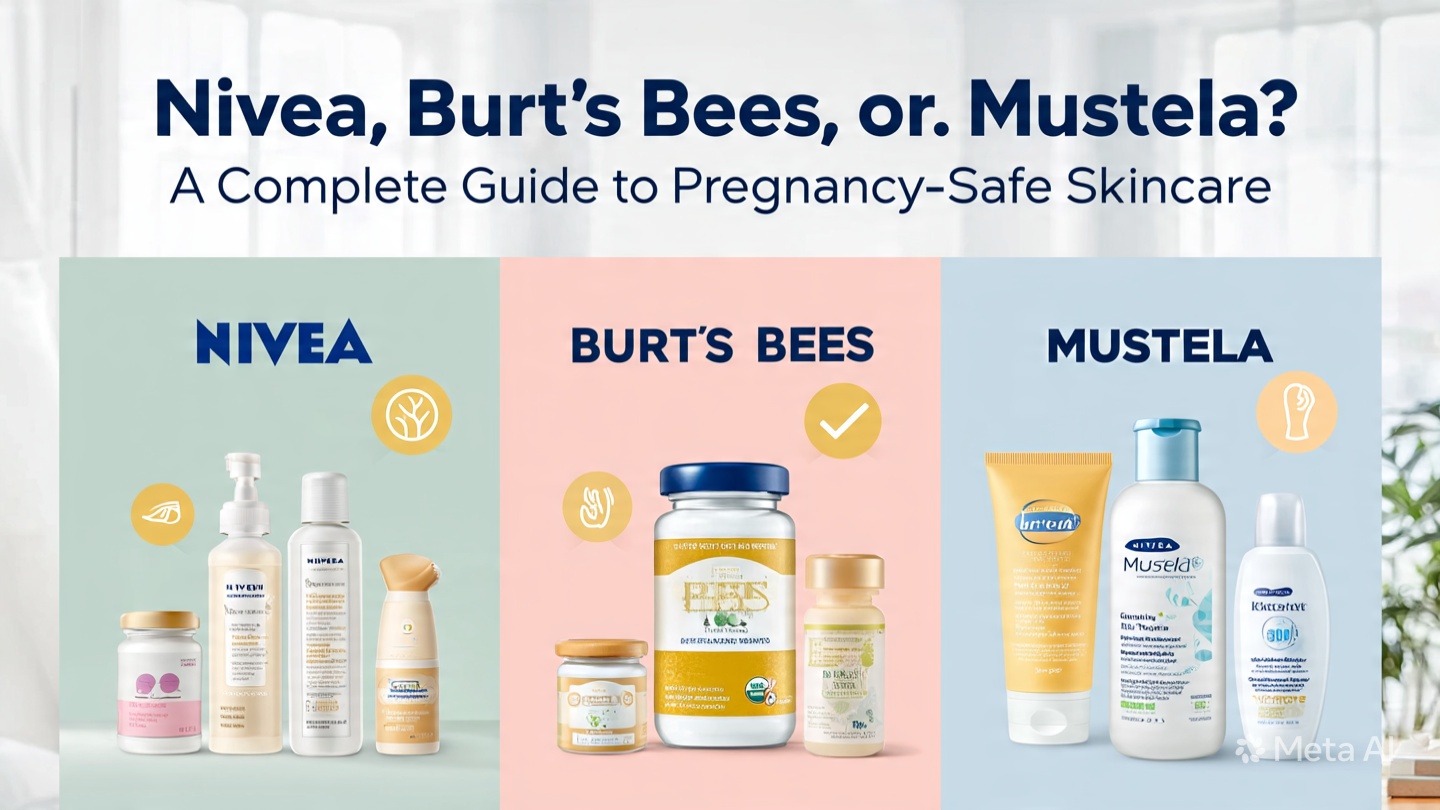
Pregnancy brings major changes to the body, and skin is often one of the first areas to reflect those changes. Hormonal fluctuations can lead to dryness, sensitivity, acne, pigmentation, and stretch marks, making skincare choices more important than ever.
At the same time, expectant mothers become more cautious about ingredient safety and product selection. Among widely available brands, Nivea, Burt’s Bees, and Mustela are often compared for pregnancy-safe skincare routines. Understanding how each brand approaches formulation, sensitivity, and safety can help you make more informed daily skincare decisions.
What Makes Skincare “Pregnancy-Safe”?
Pregnancy-safe skincare does not mean “chemical-free”—rather, it means avoiding or limiting ingredients that may be risky or insufficiently studied during pregnancy. Commonly flagged ingredients include high-dose retinoids, certain strong acids, and unnecessary harsh additives.
In general, pregnancy-safe skincare prioritizes gentle hydration, barrier support, fragrance awareness, and dermatologist-tested formulations. The goal is to support skin health without introducing potentially irritating or controversial compounds.
Each brand—Nivea, Burt’s Bees, and Mustela—takes a different approach to formulation philosophy, which influences how suitable their products are during pregnancy.
Nivea in Pregnancy Skincare
Nivea is widely known for its rich moisturizers and long-standing reputation in barrier repair and hydration. Many of its classic creams rely on emollients and occlusive ingredients that help reduce dryness, which is a common pregnancy concern.
Most basic Nivea moisturizers are generally considered suitable for pregnancy when used externally and as directed, especially those focused on hydration rather than active treatment. These products are often fragrance-containing, however, which may be a consideration for those experiencing heightened sensitivity during pregnancy.
Nivea’s strength lies in simple, effective moisture support. Still, pregnant users who prefer minimal fragrance or ultra-clean formulations may want to carefully check specific product variants before use.
Burt’s Bees in Pregnancy Skincare
Burt’s Bees is often chosen by consumers who prefer more naturally derived ingredients and simpler formulations. During pregnancy, this brand is frequently favored for lip care, body lotions, and gentle cleansers.
Its use of botanical oils, beeswax, and plant-based ingredients appeals to those looking for a more “natural-feeling” skincare routine. Many Burt’s Bees products avoid heavy synthetic additives, but they still include active botanical components that can vary in sensitivity depending on the individual.
One important consideration is that “natural” does not always equal “non-irritating.” Some plant extracts and essential oils may cause reactions in pregnancy-sensitive skin, which tends to be more reactive than usual.
Mustela in Pregnancy Skincare
Mustela is one of the most pregnancy- and baby-focused skincare brands available globally. It is specifically formulated for sensitive skin, including newborns, infants, and expectant mothers.
Many Mustela products are dermatologically tested and designed with hypoallergenic principles in mind. The brand also offers dedicated pregnancy lines that focus on stretch mark prevention, hydration, and skin elasticity support.
Because of its targeted formulation philosophy, Mustela is often considered one of the most reliable options for pregnancy skincare. Its emphasis on gentle ingredients and safety testing makes it particularly appealing for users who want minimal risk and maximum reassurance.
Ingredient Considerations During Pregnancy
Regardless of brand choice, ingredient awareness is essential during pregnancy. Skin becomes more reactive, and absorption concerns often influence product decisions.
Hydrating ingredients such as glycerin, shea butter, and hyaluronic acid are commonly considered safe and beneficial. These help maintain skin elasticity and reduce dryness without introducing strong actives.
On the other hand, ingredients like retinoids and high-strength exfoliating acids are typically avoided unless specifically recommended by a healthcare professional. Fragrance sensitivity is also common, so fragrance-free options may be preferable for many users.
Brand Comparison for Pregnancy Use
Each brand offers distinct advantages depending on personal preferences and skin sensitivity levels.
Nivea is best suited for those who want simple, affordable hydration and are comfortable with traditional skincare formulations. Its barrier-repair focus makes it useful for dryness but may include fragrance in some variants.
Burt’s Bees appeals to users who prefer naturally inspired skincare and plant-based ingredients. It offers a middle ground between natural formulation and everyday usability, though sensitivity to botanical extracts should be considered.
Mustela stands out as the most pregnancy-specialized brand, offering dermatologist-focused products designed specifically for sensitive and expectant skin. It is often the safest and most targeted choice among the three.
Lifestyle Factors That Influence Skincare Choice
Pregnancy skincare is not just about ingredients—it is also about comfort, consistency, and ease of use. Some individuals prefer rich creams for body hydration, while others need lightweight, non-greasy formulas due to increased skin oiliness.
Time also plays a role. Multi-purpose products that simplify routines are often preferred during pregnancy, especially in later stages when comfort and convenience become priorities.
Choosing a brand that aligns with daily habits ensures better consistency, which is more important than using highly specialized products occasionally.
When to Consult a Healthcare Professional
While most over-the-counter skincare products are safe for general use during pregnancy, certain skin conditions may require medical guidance. Persistent acne, severe irritation, or unusual pigmentation changes should be evaluated by a dermatologist or healthcare provider.
Pregnancy is also a time when skin reactions can change unexpectedly, even to familiar products. Patch testing new skincare items is a helpful precaution before fully integrating them into a routine.
Conclusion
Choosing between Nivea, Burt’s Bees, and Mustela for pregnancy skincare ultimately depends on your priorities and skin sensitivity. Each brand offers unique strengths that can support different needs during this stage of life.
Nivea provides reliable hydration and affordability, Burt’s Bees offers naturally inspired formulations, and Mustela delivers specialized pregnancy and sensitive-skin care. Rather than identifying a single “best” option, the most effective approach is selecting products that match your comfort level, ingredient preferences, and skin response during pregnancy.
With careful selection and attention to ingredient labels, all three brands can play a role in a safe and supportive pregnancy skincare routine.
