



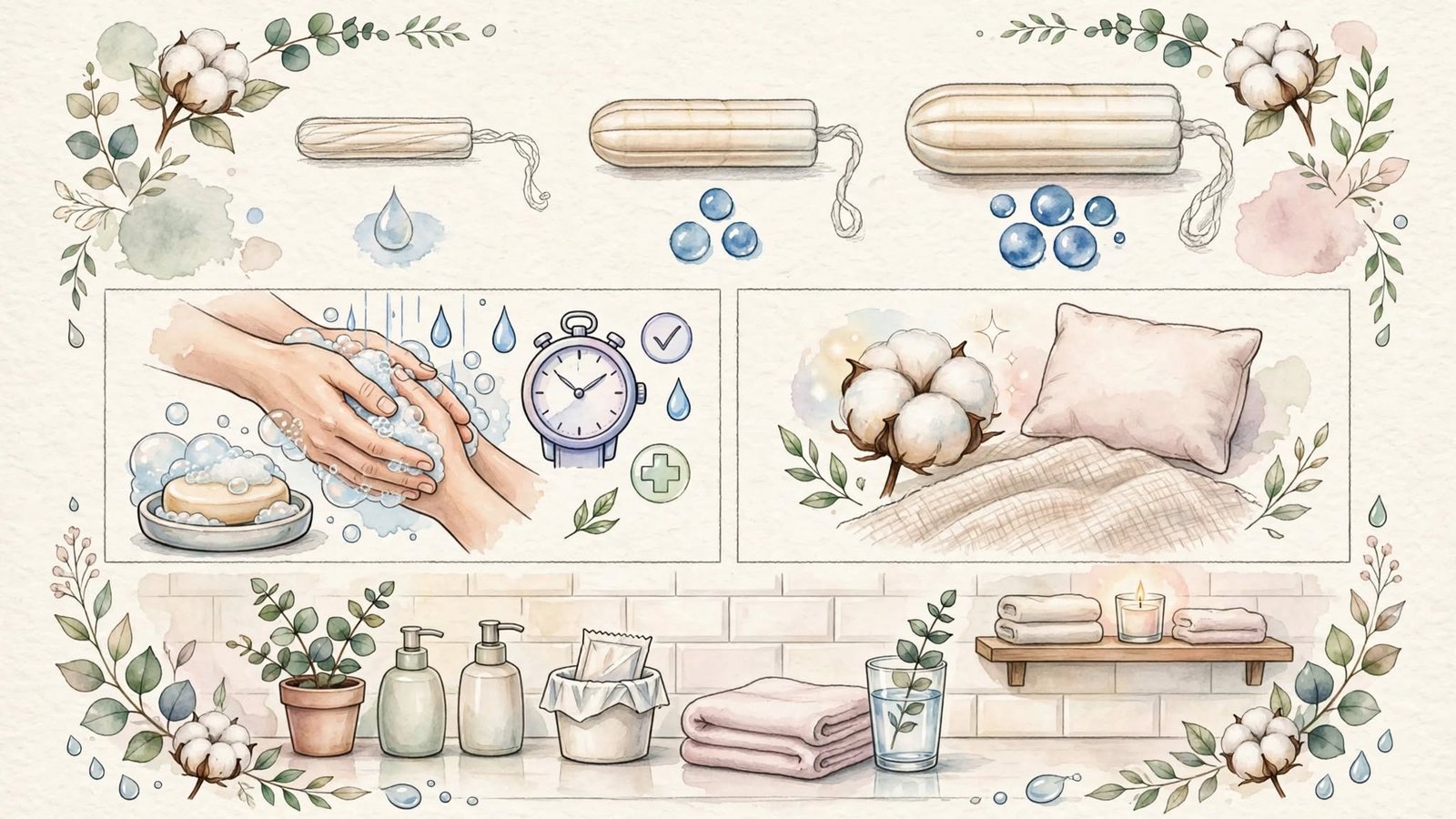
Learning how to use tampons can feel confusing at first, especially if you have never used an internal menstrual product before. The good news is that tampons are generally safe when used correctly, and with a little practice, inserting and removing them can become a comfortable part of your menstrual routine. To use a tampon, wash your hands, relax your body, gently insert the tampon into your vagina according to the package instructions, and leave the removal string accessible. Change it every four to eight hours, and never leave one in for more than eight hours. Choosing the correct absorbency, using the right insertion technique, and understanding basic hygiene are essential for comfort and safety.
Tampons are designed to absorb menstrual blood inside the vagina before it leaves the body. They come in different sizes and absorbency levels, and many are available with applicators that help guide insertion. Some tampons are designed for insertion using clean fingers instead. Whether you are a first-time user or simply want to improve your menstrual care routine, understanding how tampons work can help you feel more confident and avoid common mistakes. This guide explains how to choose a tampon, insert and remove it properly, maintain hygiene, and recognize situations that require medical attention.
What Is a Tampon and How Does It Work?
A tampon is a small absorbent product, usually made from cotton, rayon, or a blend of absorbent fibers, that is inserted into the vagina to collect menstrual blood. Once correctly positioned, it absorbs menstrual fluid before it exits the body. Most tampons have a string attached to one end so they can be removed easily when needed. Some come with a plastic or cardboard applicator, while applicator-free versions are inserted with clean fingers.
Unlike external menstrual products such as pads, tampons sit inside the vagina rather than absorbing blood outside the body. This can make them convenient for sports, swimming, exercise, and other daily activities. However, tampons require proper insertion, regular changing, and careful attention to hygiene. They should never be used as a reason to ignore discomfort or unusual symptoms. If a tampon feels painful or difficult to insert, it is important to stop and reassess your technique rather than forcing it into place.
How to Choose the Right Tampon Absorbency
Choosing the correct absorbency is one of the most important parts of using tampons safely and comfortably. Absorbency refers to the amount of menstrual fluid a tampon is designed to hold. Products are commonly labeled light, regular, super, or super plus, although the exact names and ranges vary by manufacturer. The right choice depends on your menstrual flow, which may change from day to day throughout your period.
Light Absorbency
Light-absorbency tampons are generally intended for days when menstrual flow is relatively light. They may be suitable toward the beginning or end of a period, depending on your individual pattern. Because they absorb less fluid, they can be a useful option for people who do not need a higher-capacity product. However, even a light tampon should be changed according to the recommended schedule and should not remain in place longer simply because your flow is minimal.
Regular Absorbency
Regular tampons are often a practical starting point for people with light-to-moderate or moderate menstrual flow. They offer a middle ground between light and higher-absorbency products. If you are new to tampons, a slim regular or light-absorbency option may be easier to insert, although comfort varies from person to person. Follow the product’s instructions and pay attention to how well it manages your flow throughout the day.
Super and Super Plus Absorbency
Super and super plus tampons are designed for heavier menstrual flow. They may be useful on days when a lower-absorbency tampon becomes saturated relatively quickly. However, choosing a higher absorbency than necessary is not recommended. Using the lowest absorbency that adequately manages your flow helps reduce dryness and irritation during insertion and removal and is an important safety precaution.
How Do You Know Which Absorbency You Need?
A useful approach is to choose the lowest absorbency that manages your menstrual flow without leaking before the recommended changing time. If a tampon becomes saturated quickly, you may need a higher absorbency for that part of your period. If it comes out nearly dry or removal feels uncomfortable, a lower absorbency may be more appropriate. Avoid choosing a higher absorbency simply to keep a tampon in longer. All tampons must be changed regularly, regardless of their size.
How to Insert a Tampon Correctly
Inserting a tampon for the first time may take patience, but the process becomes easier when you are relaxed and understand the basic steps. Read the instructions supplied with your particular product because applicator designs differ. Never force a tampon into the vagina, and stop if you experience sharp pain or significant discomfort.
Step 1: Wash Your Hands
Start by washing your hands thoroughly with soap and water. Clean hands help reduce the chance of transferring bacteria to the tampon or vaginal area. Open the wrapper carefully and check that the tampon and applicator, if present, are clean and undamaged. Do not use a tampon that has fallen onto a dirty surface or has damaged packaging.
Step 2: Find a Comfortable Position
Choose a position that allows you to relax your pelvic muscles. You might sit on the toilet with your knees apart, stand with one foot on the edge of the bathtub, or squat slightly. Take a few slow breaths and allow your muscles to relax. Anxiety can cause the muscles around the vaginal opening to tighten, making insertion more difficult. If you feel tense, pause and try again later rather than rushing.
Step 3: Identify the Vaginal Opening
The vaginal opening is located below the urethral opening, where urine exits the body, and above the anus. If you are unfamiliar with your anatomy, using a hand mirror in a private space may help you identify the area. The tampon should enter the vagina, not the urethra. Remember that the vagina is a flexible canal, and the natural direction of insertion is slightly backward toward the lower back rather than straight upward.
Step 4: Insert the Tampon
If you are using an applicator tampon, hold the applicator at the grip area and gently guide its rounded tip into the vaginal opening at a slight angle toward your lower back. Insert it only as far as the product instructions indicate, then push the inner applicator tube to release the tampon. Carefully withdraw the applicator, leaving the removal string outside the body.
If you are using an applicator-free tampon, hold it with clean fingers as directed by the manufacturer and gently guide it into the vagina. Push it inward until it sits comfortably and is positioned far enough inside that you do not feel it during ordinary movement. The removal string should remain outside. If the tampon does not slide in easily, stop, relax, and check the angle rather than pushing harder.
Step 5: Check Your Comfort
Once inserted correctly, a tampon should generally not be noticeable. You should be able to walk, sit, and move normally without feeling pressure or pain. If you can feel the tampon at the vaginal opening, it may not be far enough inside or may be positioned at an uncomfortable angle. Wash your hands and gently remove it if necessary, then try a fresh tampon when you feel ready. Do not keep pushing through pain, and seek medical advice if insertion repeatedly causes significant discomfort.
How to Remove a Tampon Safely
Removing a tampon is usually straightforward when you remain relaxed and follow the product instructions. Wash your hands first, sit on the toilet or stand in a comfortable position, and gently pull the string downward and slightly forward. The tampon should slide out with steady, gentle pressure. If it feels dry or uncomfortable, your menstrual flow may be too light for that absorbency, or the tampon may not have absorbed enough fluid yet.
Never pull forcefully if the tampon seems stuck or causes sharp pain. Relaxing the pelvic muscles and changing position may help. A tampon cannot travel through the vagina into the abdomen because the cervix separates the vagina from the uterus, but it can occasionally become difficult to remove if the string moves out of reach. If you cannot remove a tampon yourself, contact a healthcare professional promptly for assistance. Do not use sharp objects or other tools to retrieve it.
After removal, wrap the used tampon in toilet paper and place it in a waste bin. Do not flush tampons or applicators down the toilet because they can contribute to plumbing blockages. Wash your hands again before continuing with your menstrual care routine.
How Often Should You Change a Tampon?
Tampons should generally be changed every four to eight hours, and you should never leave one in for more than eight hours. You may need to change yours more frequently if your menstrual flow is heavy or the tampon becomes saturated before four hours. Follow the instructions on the product packaging, and choose an absorbency appropriate for your flow rather than relying on a higher-absorbency tampon to extend the changing interval.
If you sleep with a tampon, insert a fresh one shortly before going to bed and remove it as soon as you wake up, ensuring that the total time does not exceed eight hours. If you expect to sleep longer than eight hours, use an alternative such as a menstrual pad. It is helpful to keep track of insertion times, particularly when you are first learning to use tampons or have a busy schedule.
Important Tampon Safety Tips
Use the Lowest Effective Absorbency
Choose the lowest absorbency that adequately manages your flow. Higher absorbency is not inherently better, and using a tampon that is more absorbent than necessary may cause vaginal dryness or discomfort. If you notice that removal is consistently difficult because the tampon feels dry, consider switching to a lower-absorbency option.
Never Leave a Tampon in for Too Long
Keeping a tampon in beyond the recommended time can increase the risk of complications, including toxic shock syndrome (TSS), a rare but potentially life-threatening condition associated with certain bacterial toxins. Follow the maximum eight-hour limit and change the tampon regularly. If you are concerned that you may have left a tampon in too long, remove it as soon as possible and seek medical advice if you develop concerning symptoms.
Do Not Use Tampons for Vaginal Discharge Alone
Tampons are designed to absorb menstrual blood, not to manage routine vaginal discharge. Normal discharge is part of the vagina’s natural cleaning process, and using tampons when you are not menstruating may cause unnecessary dryness or irritation. If discharge has an unusual smell, color, or consistency, or is accompanied by itching or pain, seek medical advice rather than trying to manage it with a tampon.
Avoid Scented Products if They Cause Irritation
Some menstrual products are scented, but fragrance is unnecessary for effective menstrual protection and may irritate sensitive skin or vaginal tissue. If you are prone to irritation, choose an unscented product and stop using any tampon that causes persistent discomfort. Seek professional advice if irritation continues after discontinuing the product.
Do Not Reuse a Tampon
Tampons are single-use products. Remove and discard each tampon after use, and insert a fresh one when needed. Never wash, clean, or reuse a used tampon. Follow the manufacturer’s instructions for storage and disposal, and keep unused products in a clean, dry place.
Understanding Toxic Shock Syndrome
Toxic shock syndrome is a rare but serious condition that can occur when certain bacteria produce toxins in the body. It has been associated with tampon use, although it can occur in other circumstances as well. Following the recommended changing schedule and using the lowest effective absorbency can help reduce the risks associated with tampon use, but these measures cannot eliminate every possibility of TSS.
Symptoms can develop suddenly and may include a high fever, vomiting, diarrhea, dizziness, fainting, muscle aches, confusion, or a rash that resembles sunburn. Not everyone experiences every symptom. If you are using a tampon and develop sudden severe illness or symptoms suggestive of TSS, remove the tampon if you can do so easily and seek emergency medical care immediately. Do not wait for all symptoms to appear or attempt to treat the condition at home.
Can You Sleep, Swim, or Exercise With a Tampon?
Sleeping With a Tampon
You can generally sleep while wearing a tampon if you insert it shortly before going to bed and remove it within eight hours. If you regularly sleep longer than eight hours, a pad or another suitable menstrual product may be a better option. Planning ahead can help you avoid exceeding the recommended wear time.
Swimming With a Tampon
Tampons can be convenient for swimming because they absorb menstrual blood internally. Insert a fresh tampon before swimming if needed, follow the recommended changing schedule, and change it afterward when appropriate. Swimming does not remove the need for regular changes or make a tampon safe to wear beyond eight hours.
Exercising With a Tampon
A properly inserted tampon should generally allow you to walk, run, stretch, and participate in sports comfortably. If you feel pressure, pain, or a sensation that the tampon is slipping out, it may not be positioned correctly or may be unsuitable for your current flow. Stop if you experience pain and adjust your menstrual care routine as needed. You should never have to tolerate persistent discomfort to continue exercising.
Common Tampon Problems and How to Solve Them
The Tampon Hurts During Insertion
Pain during insertion may occur if you are tense, the tampon is too large for your current flow, or the insertion angle is uncomfortable. Try a lower-absorbency or slimmer tampon, relax your pelvic muscles, and follow the product instructions carefully. If insertion remains painful, stop and consult a healthcare professional. Persistent pain may have causes that require assessment, and forcing insertion can make the experience more uncomfortable.
The Tampon Feels Uncomfortable After Insertion
A tampon that is correctly positioned should not usually be noticeable. If you feel it near the vaginal opening, it may not be inserted far enough. You can remove it gently and try again with a fresh tampon if appropriate. If discomfort continues despite correct technique, consider using pads or another external menstrual product and seek medical advice if needed.
The Tampon Leaks
Leaks may occur when the tampon becomes saturated, when the absorbency is too low for your flow, or when the tampon is not positioned correctly. Check how often you need to change it and consider a higher absorbency if your current tampon fills quickly. However, do not exceed the eight-hour limit or choose a higher absorbency solely to reduce the frequency of changes. A pantyliner can provide additional protection against small leaks.
You Cannot Find the Removal String
If the string moves inside the vagina, try to stay calm. Wash your hands, relax your pelvic muscles, and gently feel for the string or tampon with a clean finger if you are comfortable doing so. Never use tweezers or other objects. If you cannot remove the tampon easily, seek help from a healthcare professional promptly. A retained tampon should not be ignored, particularly if you notice an unusual odor, discharge, pelvic pain, or fever.
Can Teenagers and First-Time Users Use Tampons?
Teenagers and people who have never used tampons can generally use them if they menstruate and feel comfortable doing so. There is no requirement to have used another menstrual product first. A first-time user may prefer a slim tampon with light or regular absorbency, depending on their flow, and an applicator may make insertion easier for some people. Reading the instructions and allowing enough time to practice without rushing can help build confidence.
Using a tampon does not take away someone’s virginity. Virginity is a social and personal concept, not a medical diagnosis, and tampon use does not indicate whether someone has had sexual intercourse. The hymen is a flexible tissue that varies naturally from person to person and may stretch for several reasons. If you experience pain or have difficulty inserting a tampon, do not force it. A healthcare professional can help identify the cause and discuss suitable menstrual products.
Tampons Compared With Pads and Menstrual Cups
Tampons, pads, and menstrual cups each offer different advantages, and the best option depends on your comfort, lifestyle, menstrual flow, and personal preferences. Tampons are worn internally and can be convenient for swimming and physical activities. Pads are worn externally and may be easier for people who do not want to insert a product into the vagina. Menstrual cups collect blood rather than absorb it and can be reused according to the manufacturer’s cleaning and wear-time instructions.
No single menstrual product is right for everyone. Some people use tampons during the day and pads at night, while others prefer one product throughout their period. It is also possible to change products as your flow varies. Whatever you choose, follow the product’s safety instructions, maintain appropriate hygiene, and seek medical advice if you experience persistent pain, irritation, or unusual symptoms.
When Should You Speak With a Healthcare Professional?
Seek medical advice if tampon insertion repeatedly causes significant pain, you cannot remove a tampon, or you experience persistent vaginal irritation, unusual discharge, or an unpleasant odor that does not resolve after removing the product. You should also seek prompt advice if you suspect a tampon has been retained for longer than recommended. A healthcare professional can assess the situation and advise you on safe removal or alternative menstrual products.
Seek emergency medical care if you develop a sudden high fever, faintness, confusion, vomiting, a widespread rash, or other severe symptoms while using a tampon, especially if toxic shock syndrome is a concern. Remove the tampon if you can do so easily, but do not delay urgent care to do this. Heavy menstrual bleeding that repeatedly soaks through products very quickly, causes significant weakness, or is accompanied by severe pain also deserves medical assessment.
Frequently Asked Questions About Using Tampons
How long can you wear a tampon?
A tampon should generally be changed every four to eight hours and must not remain in place for longer than eight hours. Change it sooner if it becomes saturated or your menstrual flow requires more frequent changes.
Can a tampon get lost inside the body?
No. A tampon cannot travel into the abdomen because the cervix separates the vagina from the uterus. However, a tampon or its string can become difficult to reach. If you cannot remove it easily, seek help from a healthcare professional rather than using tools.
Does inserting a tampon hurt?
Insertion should not cause significant pain. It may feel unfamiliar at first, but relaxation, correct positioning, and choosing an appropriate size can help. Persistent or sharp pain is a reason to stop and seek medical advice if it continues.
Can you urinate while wearing a tampon?
Yes. Urine exits through the urethra, which is separate from the vaginal opening where the tampon sits. You can urinate normally without removing the tampon. You may need to move the string to keep it from getting wet.
Can you use a tampon on a light-flow day?
Yes, if you are menstruating and choose an appropriately low absorbency. However, removal may be uncomfortable if the tampon remains relatively dry. If your flow is extremely light, a pad or pantyliner may be more comfortable.
Should you sleep with a tampon?
You can generally sleep with a tampon if you will remove it within eight hours. If you may sleep longer, choose another suitable menstrual product to avoid exceeding the recommended wear time.
Conclusion
Learning how to use tampons safely begins with choosing an appropriate absorbency, washing your hands, inserting the product gently, and changing it regularly. A correctly positioned tampon should generally feel comfortable and should not interfere with everyday activities such as walking, swimming, sleeping within the recommended time limit, or exercising. If insertion hurts, removal is difficult, or irritation persists, do not force the process; consider another menstrual product and seek professional guidance when necessary.
The most important safety rule is to change tampons every four to eight hours and never leave one in for more than eight hours. Choose the lowest absorbency that adequately manages your flow, follow the manufacturer’s instructions, and recognize the warning signs of toxic shock syndrome. With accurate information and a little practice, you can make informed choices about menstrual care and find the approach that best supports your comfort, health, and daily routine.
