



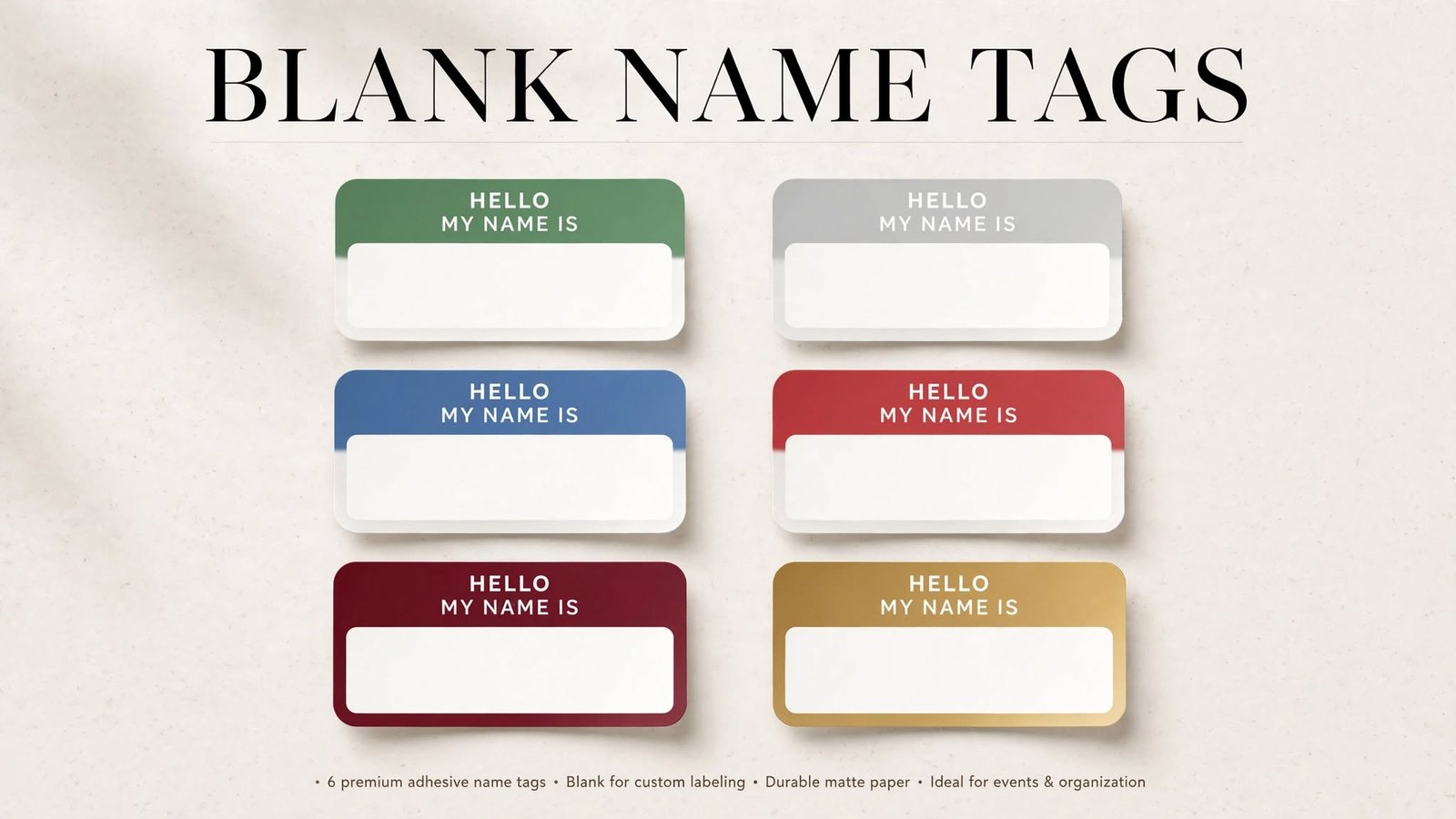
Blank name tags are a simple and practical way to identify people, organize events, and create a more welcoming environment. They provide a dedicated space for names and other details while allowing users to choose their own design, material, and customization options.
From schools and offices to conferences, parties, workshops, and networking events, blank name tags can be adapted to many different situations. Understanding the available options can help you choose name tags that are appropriate for your event, audience, and budget.
What Are Blank Name Tags?
Blank name tags are labels, badges, cards, or stickers designed with an open area where information can be added. The most common information is a person’s name, but some designs also provide space for a job title, company, department, event name, or other relevant details.
They are available in various shapes, sizes, materials, and attachment styles. Some are designed for one-time use, while others can be reused by replacing an insert or updating the printed information.
Why Are Blank Name Tags Useful?
Name tags make it easier for people to identify one another, particularly at events where attendees may be meeting for the first time. A clearly visible name can make introductions more comfortable and encourage conversations.
They can also help staff members, volunteers, students, visitors, and participants identify different groups within an organization or event. When designed consistently, name tags can also contribute to a more organized and professional appearance.
Different Types of Blank Name Tags
Blank name tags come in several formats, and choosing the right type depends on how and where they will be used. Paper and cardstock tags are popular for temporary events because they are affordable and easy to write on or print.
Adhesive name tags are another convenient option. They can be attached directly to clothing or other suitable surfaces and are often used for meetings, classrooms, parties, and short-term events.
Reusable plastic badges are designed for situations where name tags are needed regularly. They often include replaceable inserts, allowing organizations to update names and other information without replacing the entire badge.
Magnetic name tags provide another option for professional environments. They attach to clothing using magnets instead of pins, making them suitable for offices, conferences, exhibitions, and customer-facing roles.
How to Choose the Right Name Tag Material
The material of a blank name tag affects its durability, appearance, comfort, and cost. Paper is generally suitable for short events, while heavier cardstock can provide a more substantial and polished feel.
Plastic name tags can be a better choice for organizations that need reusable identification. They can withstand repeated handling and may be paired with replaceable paper inserts.
If name tags will be used outdoors or in environments where they could become exposed to moisture, consider a material or protective finish that offers greater resistance. The expected duration and conditions of use should guide the material choice.
Choosing the Right Size and Shape
The size of a name tag should provide enough room for the information that needs to be displayed without becoming unnecessarily large. A person’s name should remain easy to read from a comfortable distance.
Traditional rectangular tags are versatile and work well for professional and casual settings. However, rounded, square, circular, or custom-shaped designs can be useful when an event has a particular theme or visual identity.
Before selecting a size, consider how the badge will be worn. A name tag should be large enough to remain readable while still being comfortable and practical for the wearer.
How to Customize Blank Name Tags
Customization can range from simply writing a person’s name to creating a fully branded professional badge. For casual gatherings, handwritten names can provide a friendly and informal appearance.
For businesses and larger events, information can be printed using a consistent template. Names can be combined with company logos, job titles, departments, event names, or other relevant details.
Colors, borders, icons, and simple graphic elements can also be incorporated into the design. However, customization should not make the main identifying information difficult to see.
Creating a Blank Name Tag Template
A blank name tag template provides a consistent layout that can be reused for multiple attendees. A basic template may include a large space for the person’s name and smaller areas for a company, organization, role, or event.
Templates can be created using common word-processing or graphic-design software. Once the basic design has been created, it can be duplicated and customized for each participant.
When creating a template, leave sufficient space around the text and avoid placing important information too close to the edges. A clean layout usually makes the finished name tag easier to read and print.
Handwritten or Printed Name Tags?
The choice between handwritten and printed name tags depends largely on the type and size of the event. Handwritten tags are quick and convenient when there are only a few participants or when names may change shortly before an event.
Printed name tags offer greater consistency and are generally more appropriate for professional conferences, business meetings, trade shows, and large gatherings. They allow the same fonts, spacing, colors, and branding to be used across every badge.
For recurring events, a combination of reusable holders and replaceable printed inserts can provide flexibility while maintaining a professional appearance.
Designing Easy-to-Read Name Tags
Readability should be a major priority when customizing blank name tags. Choose fonts that are clear and avoid overly decorative typefaces that may make names difficult to recognize.
The person’s name should generally be the most prominent element. Supporting information, such as a job title or company name, can be displayed in a smaller size beneath it.
Good contrast between the text and background is also important. A simple design with adequate spacing is often easier to read than a heavily decorated name tag containing too many visual elements.
Using Name Tags for Different Events
Different events may require different approaches to name-tag customization. Corporate conferences may include a person’s name, company, job title, and event branding.
Schools and educational programs may only need a first name, class, group, or activity name. Simple designs can work particularly well when participants need to write their own information.
Social events such as weddings, parties, and reunions may use decorative designs that match the event’s theme. In these situations, the name tag can serve both an identification and a decorative purpose.
Blank Name Tags for Businesses
Businesses can use blank name tags for employees, temporary workers, visitors, volunteers, and event representatives. Consistent name tags can make it easier for customers and colleagues to understand who they are interacting with.
For workplaces where staff information changes regularly, reusable badge holders can be particularly convenient. An updated insert can be printed whenever an employee changes roles or a new member joins the organization.
Company branding can also be incorporated into the design. A logo, brand colors, and consistent typography can make employee badges look more professional without overwhelming the person’s name.
Printing Blank Name Tags
Printing name tags requires careful attention to layout and alignment. Before producing a large batch, print a test copy to check the positioning of names, borders, logos, and other elements.
The paper or label settings should also match the template being used. Incorrect margins or page settings can cause text to appear outside the intended printing area.
For larger events, information stored in a spreadsheet can sometimes be connected to a document template through a mail-merge process. This can reduce repetitive data entry and make it easier to create multiple personalized tags.
Tips for Choosing Blank Name Tags
Consider the event duration, number of attendees, environment, and desired appearance before purchasing blank name tags. A temporary classroom activity may require a very different solution from a multi-day business conference.
Think about how the tags will be attached as well. Adhesive labels, clips, pins, lanyards, and magnetic attachments each offer different advantages depending on the clothing, setting, and length of use.
It is also useful to consider whether the tags will be discarded after one use or reused. Reusable systems may require a larger initial investment but can be practical for organizations that host events regularly.
Common Mistakes to Avoid
One common mistake is using text that is too small. Even if all the required information technically fits on the tag, attendees may struggle to read it from a normal conversational distance.
Another issue is excessive decoration. Too many colors, graphics, borders, or pieces of information can make the badge look crowded and reduce the visibility of the person’s name.
It is also important to test the finished design before producing a large quantity. A simple test print can reveal alignment, sizing, and readability problems before they affect an entire batch.
Final Thoughts
Blank name tags are versatile identification tools that can be customized for professional, educational, social, and organizational settings. Their wide range of materials, sizes, attachment methods, and designs makes it possible to find an option for almost any type of event.
The best choice depends on how the tags will be used, how long they need to last, and what information they need to display. By selecting a suitable material, using a clear template, and prioritizing readability, you can create name tags that are practical, professional, and easy to customize.
