



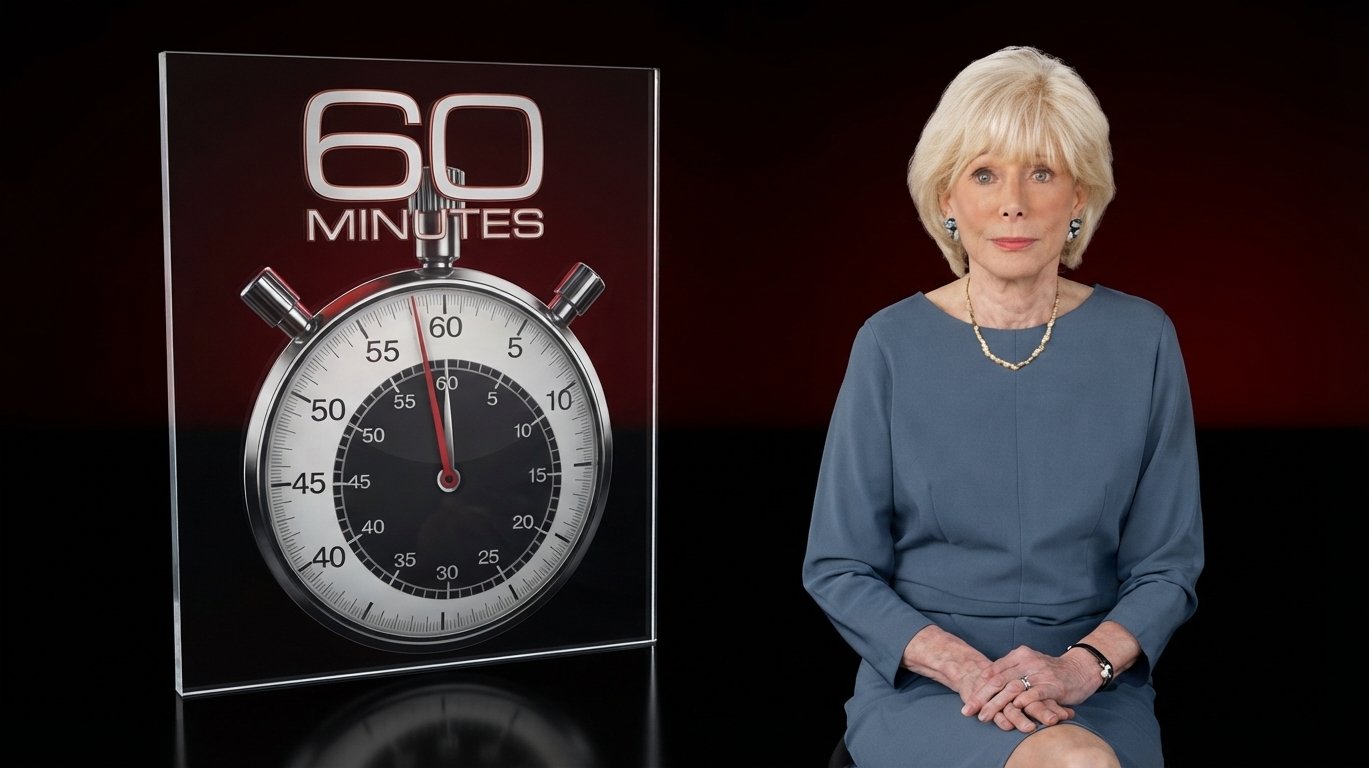
The American news program 60 Minutes explored three important subjects in its October 4, 2026, broadcast: political leadership and Senator Thom Tillis, the preservation of the historic Basilica of Saint Francis of Assisi in Italy, and the growing influence of artificial intelligence on the modern workplace.
Although these stories focus on different areas, they share a common theme: how people respond to change while protecting important values, institutions, and traditions.
From the future of employment to political accountability and the preservation of centuries-old artwork, the program examined issues that continue to influence society.
What Was Featured on 60 Minutes?
The October 4, 2026, episode of 60 Minutes featured three main segments: “Who Needs Humans?”, “The Thom Tillis Tightrope,” and “Saint Francis in the Cloud.”
The first segment explored how artificial intelligence is changing professional work and why human expertise remains valuable in developing advanced AI systems. The second examined Senator Thom Tillis’s political career, his relationship with President Donald Trump, and disagreements within the Republican Party.
The third segment focused on the Basilica of Saint Francis of Assisi and the use of modern technology to preserve its historic artwork.
Together, these reports offered viewers perspectives on politics, technological innovation, cultural heritage, and the challenges facing modern society.
1. Thom Tillis: Political Leadership and the Republican Party
Who Is Thom Tillis?
Thom Tillis is an American Republican politician from North Carolina who served in the United States Senate. Throughout his political career, he has participated in debates about government policy, party leadership, and the direction of American politics.
His appearance on 60 Minutes provided an opportunity to discuss his political experiences and his views on the Republican Party. The interview also explored how his personal background influenced his political outlook.
Thom Tillis’s Relationship With Donald Trump
One of the main subjects of the interview was Tillis’s relationship with President Donald Trump and members of the president’s political circle.
Tillis discussed concerns about political advisers and disagreements over the direction of the administration. His comments highlighted tensions that can emerge within political parties when elected officials disagree about leadership, strategy, and policy.
The discussion also raised questions about the relationship between party loyalty and independent judgment. Elected representatives must often balance their political affiliations with their responsibilities to their constituents and the broader public.
Tillis’s Retirement and Political Legacy
The interview also examined Tillis’s decision to leave the Senate and reflected on his experiences in American politics.
His political career offers an opportunity to consider how lawmakers navigate disagreements, public expectations, and relationships with powerful political figures.
The conversation also addressed ideas explored in his book, How to Lose Friends and Antagonize Presidents, which reflects on political relationships and the challenges of dealing with presidential leadership.
2. The Basilica of Saint Francis of Assisi: Preserving History With AI
The Historical Importance of the Basilica
The Basilica of Saint Francis of Assisi is one of Italy’s most significant religious and artistic landmarks. Located in Assisi, the historic church is closely associated with Saint Francis, a medieval religious figure known for his commitment to humility, poverty, and service.
The basilica is famous for its medieval frescoes and other artistic treasures. Its paintings and architecture make it an important destination for people interested in religious history, European art, and cultural heritage.
However, the building suffered extensive damage during two powerful earthquakes in 1997. Parts of the structure collapsed, and numerous fragments of historic artwork were scattered or damaged, creating a difficult restoration challenge.
How Artificial Intelligence Is Helping Restore the Basilica
The 60 Minutes report examined how art historians, engineers, and Franciscan friars are using modern technology to help preserve the basilica’s artistic heritage.
One of the major challenges involves identifying and matching thousands of fragments left by the 1997 earthquakes. Reconstructing damaged frescoes requires patience, specialist knowledge, and careful examination of individual pieces.
Artificial intelligence can help researchers analyze visual patterns, identify similarities between fragments, and suggest possible matches. These capabilities may make it easier for restoration specialists to organize information and investigate potential reconstructions.
However, AI does not replace human expertise. Art historians and conservation professionals must evaluate the results carefully to ensure that restoration decisions respect the historical accuracy and integrity of the original artwork.
Gigapixel Photography and Digital Reconstruction
Another important aspect of the preservation project involves high-resolution photography, laser scanning, and drone technology.
These tools can capture detailed images of the basilica’s architecture and artwork, creating a digital representation of the building. Such a digital model can help specialists document its condition and monitor changes over time.
Detailed digital records may also prove valuable if the building experiences future damage. Researchers and restorers could use the information to understand the structure’s previous condition and support conservation planning.
Making Cultural Heritage More Accessible
Digital preservation can also make historical artwork accessible to people who cannot visit Italy in person.
High-resolution images and virtual experiences allow viewers to examine artistic details that may be difficult to appreciate from a distance. Researchers, students, and art enthusiasts can explore the basilica’s cultural significance through digital technology.
The project demonstrates how modern innovation can support the preservation of historical treasures while helping more people learn about their importance.
3. Artificial Intelligence and the Future of Work
What Does AI Mean for Human Jobs?
The episode’s opening segment, “Who Needs Humans?”, examined how artificial intelligence is changing the workplace.
The report explored the role of companies that employ specialists to help train AI systems. These professionals contribute industry knowledge, evaluate computer-generated responses, and help improve the quality of AI outputs.
Experts from fields such as medicine, finance, architecture, and other specialized professions can provide knowledge that general-purpose AI systems may struggle to reproduce accurately.
Their involvement demonstrates that AI development often depends on human experience, professional judgment, and the ability to recognize mistakes.
Why Human Expertise Still Matters
Artificial intelligence can process information quickly, but speed does not automatically guarantee accuracy or sound judgment.
Human specialists can assess whether AI-generated information is reliable, identify errors, and explain complicated concepts within their professional fields.
For example, medical professionals can help evaluate whether an AI system interprets medical information appropriately. Financial specialists can assess whether an AI-generated analysis accurately reflects relevant financial principles.
The impact of AI will vary across industries. Some jobs may change significantly, certain tasks may become automated, and new opportunities may emerge for workers who help develop, supervise, and evaluate these technologies.
Understanding these changes will be important for businesses, employees, educators, and policymakers.
AI in Media Production
The broadcast also demonstrated how artificial intelligence is beginning to influence television production.
AI-generated media can help producers experiment with visual storytelling, digital effects, and new presentation techniques. These applications may create opportunities to improve production workflows and explore creative possibilities.
However, the use of AI in journalism also raises questions about accuracy, transparency, and audience trust.
Media organizations must consider how viewers understand AI-generated material and how to distinguish authentic recordings from synthetic content. Responsible use of the technology will remain important as its capabilities continue to develop.
4. What Connects the Three Stories?
At first glance, the three stories featured on 60 Minutes may seem unrelated. One examines American politics, another explores historical preservation, and the third investigates the future of employment.
However, all three concern how people respond to change and make decisions that can have long-term consequences.
The Thom Tillis interview explored political leadership, accountability, and disagreements within a major political party. The basilica report demonstrated how technology can help preserve historical artwork, while the AI workplace segment examined the changing relationship between human expertise and automation.
Together, these subjects show that progress involves more than technological capabilities or political decisions. Human judgment, responsibility, and the preservation of important institutions also play essential roles.
Artificial intelligence can support professional work, help protect cultural heritage, and contribute to media production. At the same time, its use requires careful consideration of its limitations, potential benefits, and broader consequences.
5. Why These Stories Matter Today
The topics covered in the broadcast reflect issues that affect people across different parts of society.
Political leadership influences public policy, government accountability, and the relationship between elected officials and their constituents. Understanding these issues can help viewers evaluate political developments more carefully.
Cultural preservation protects historical knowledge and artistic achievements for future generations. Combining conservation expertise with modern technology may create new ways to document and protect valuable landmarks.
Meanwhile, artificial intelligence is changing how organizations approach work, creativity, and decision-making. Learning how the technology operates and where human expertise remains essential can help individuals prepare for a changing professional environment.
These stories demonstrate that developments in politics, technology, and culture are closely connected to the choices people make about the future.
Conclusion
The October 4, 2026, episode of 60 Minutes explored three important subjects: Thom Tillis and American political leadership, the use of artificial intelligence to preserve the Basilica of Saint Francis of Assisi, and the growing influence of AI on employment and professional expertise.
Each report examined a different challenge facing modern society. Together, they highlighted the importance of accountability, innovation, historical preservation, and responsible decision-making.
For readers interested in current affairs, cultural heritage, and emerging technology, these stories provide a useful starting point for understanding how society is changing.
Ultimately, progress depends not only on what new technologies and institutions can accomplish, but also on how people choose to use them and the values they seek to protect.

1 Comment
Pingback: Virginia Business Entity Search: How to Verify Business Information A Step-by-Step