



Hachikō is remembered around the world as one of the most loyal dogs in history. His story began in Japan during the early 20th century and became famous because of his extraordinary devotion to his owner, Professor Hidesaburō Ueno.
Even after Ueno died unexpectedly, Hachikō continued returning to Shibuya Station, where he had once waited for his owner to come home. For nearly a decade, his daily routine became a powerful symbol of loyalty, love, and remembrance.
Who Was Hachikō?
Hachikō was an Akita dog born in November 1923 in Odate, Akita Prefecture, Japan. He was an Akita Inu, a Japanese breed known for its strength, independence, intelligence, and close bonds with its family.
In 1924, Hachikō was brought to Tokyo by Professor Hidesaburō Ueno, an agricultural engineering professor at the University of Tokyo. The professor and his dog developed a strong relationship, and Hachikō soon became an important part of Ueno’s daily life.
Professor Ueno regularly traveled to work by train from Shibuya Station. Hachikō developed a habit of accompanying him to the station and later waiting there around the time Ueno was expected to return.
Hachikō’s Daily Routine With Professor Ueno
The relationship between Hachikō and Professor Ueno was built around a simple but meaningful routine. Each day, Hachikō would accompany his owner toward Shibuya Station and later return to the station to greet him.
This routine became particularly significant because Hachikō appeared to understand the pattern of Ueno’s working day. His repeated presence at the station reflected the strong attachment he had developed to his owner.
For Hachikō, the station was not simply a transportation hub. It had become a place associated with his owner’s arrival, making it central to his daily life.
The Day Everything Changed
On May 21, 1925, Professor Ueno suffered a fatal cerebral hemorrhage while at the University of Tokyo. He died without returning home, leaving Hachikō waiting for someone who would never come back.
Hachikō could not understand the circumstances in the way a human could. Nevertheless, he continued returning to Shibuya Station, apparently expecting to see his owner again.
This marked the beginning of the part of Hachikō’s story that would eventually make him internationally famous.
Hachikō Continued Waiting at Shibuya Station
After Ueno’s death, Hachikō continued visiting Shibuya Station. He reportedly appeared at the station around the time when his owner had previously returned from work.
At first, his behavior attracted attention from people who knew the dog and understood his connection to Professor Ueno. Over time, however, Hachikō became a familiar figure to commuters, station workers, and local residents.
His repeated appearances transformed an ordinary daily habit into a remarkable story of devotion. People began recognizing the dog and learning why he continued to wait.
How Hachikō Became Famous
Hachikō’s story received wider attention after a newspaper article was published in Japan in 1932. The article helped introduce his remarkable loyalty to a much larger audience.
As public interest grew, Hachikō became a beloved figure in Tokyo. People visited Shibuya Station specifically to see him, while others brought him food and showed him affection.
His story resonated because it was simple and emotional. A dog continued returning to the same place for an owner who would never return, creating a powerful image of unconditional loyalty.
The Meaning Behind the Name Hachikō
Hachikō was originally named Hachi. The Japanese word “hachi” means “eight,” and the suffix “kō” was later added as a term of affection and respect.
His name became closely associated with his story, eventually becoming recognized far beyond Japan. Today, the name Hachikō is strongly connected with loyalty and devotion.
The dog himself also became an important cultural symbol, representing the emotional bond that can exist between humans and animals.
Hachikō’s Final Years
Hachikō continued returning to the area around Shibuya Station for years after Professor Ueno’s death. His health gradually declined as he grew older, but his connection with the station remained an important part of his life.
He died on March 8, 1935, at the age of 11. His death was widely mourned, demonstrating just how deeply his story had affected the people of Tokyo.
Hachikō’s life had become much larger than the relationship between one dog and one owner. By the end of his life, he had become a public symbol of loyalty and remembrance.
The Hachikō Statue at Shibuya Station
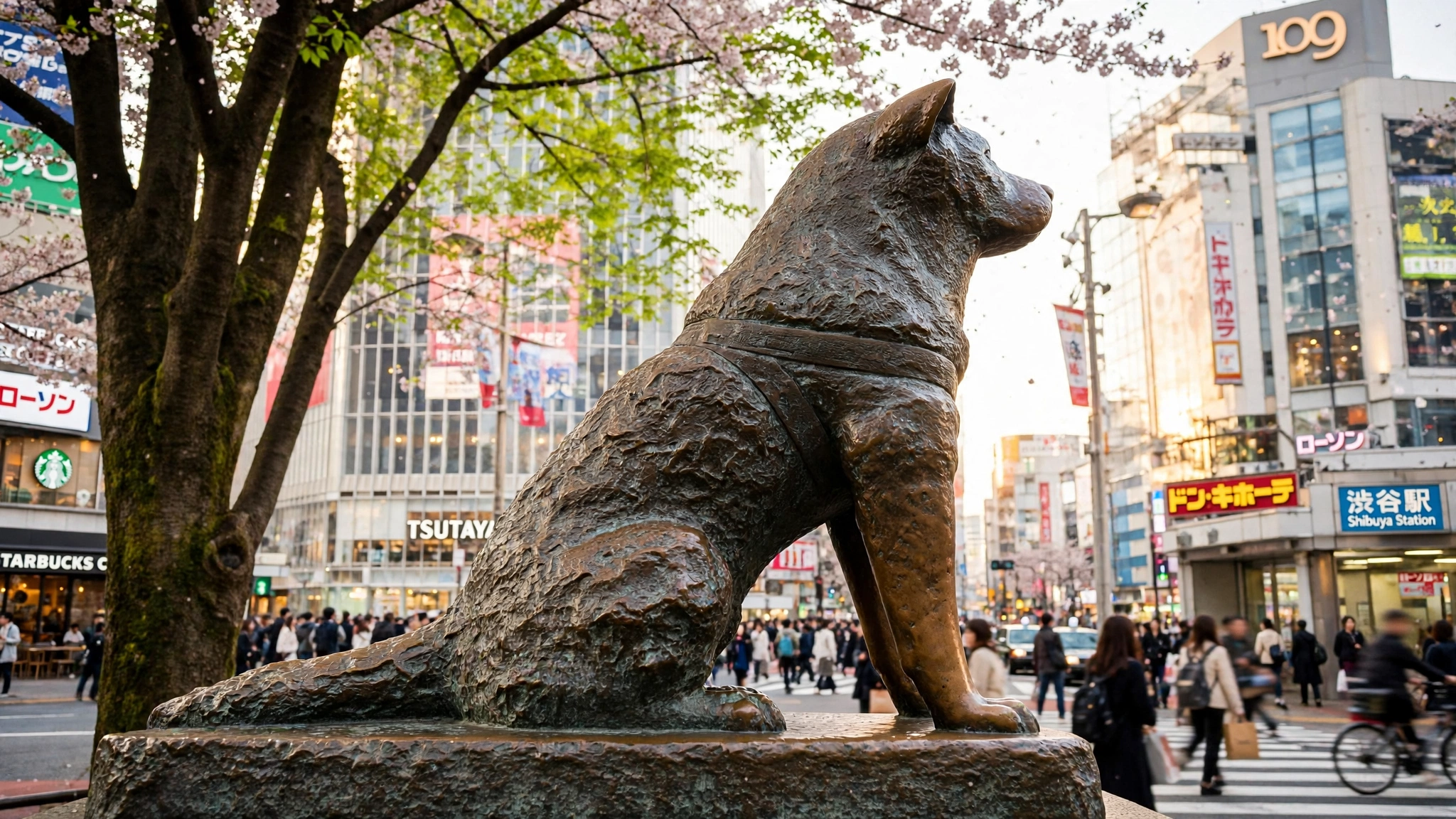
One of the most recognizable tributes to Hachikō is the statue located near Shibuya Station in Tokyo. The original statue was unveiled in 1934, while Hachikō was still alive.
The statue quickly became a meeting place and a permanent reminder of his story. Although the original statue was lost during World War II, a replacement statue was later created.
Today, the Hachikō statue is one of Shibuya’s most famous landmarks. It has also become a popular meeting point for people visiting the district.
Hachikō’s Cultural Legacy
Hachikō’s story has continued to influence Japanese culture and popular culture around the world. His life has been remembered through statues, books, films, documentaries, and educational material.
The story became especially well known internationally through the 2009 film Hachi: A Dog’s Tale, starring Richard Gere. The movie introduced the emotional story of Hachikō to audiences who may not have previously known about the Japanese dog.
Although adaptations can dramatize historical events, the central idea remains the same: Hachikō’s remarkable attachment to Professor Ueno became a lasting story about loyalty and loss.
Why Hachikō’s Story Still Matters
Hachikō’s story continues to attract attention because it represents emotions that people across cultures can understand. Loyalty, companionship, grief, and remembrance are universal themes.
His story also highlights the important role animals can play in human lives. For Professor Ueno, Hachikō was a companion, while for later generations, Hachikō became a symbol of extraordinary devotion.
The story is therefore more than a historical account of a dog waiting at a railway station. It has become a cultural reminder of the deep relationships that can exist between people and animals.
Hachikō as a Symbol of Loyalty
Hachikō is often described as Japan’s most loyal dog, and his name has become almost synonymous with faithfulness. His continued visits to Shibuya Station created an enduring image of a dog refusing to abandon the memory of his owner.
At the same time, it is important to understand his story within its historical context. Some details surrounding his routine and motivations have been simplified over the years, particularly as his story became a popular cultural legend.
Nevertheless, the historical record clearly shows that Hachikō became famous for repeatedly returning to Shibuya Station after Professor Ueno’s death.
Conclusion
Hachikō’s life remains one of the most touching animal stories in modern history. Born in Akita and brought to Tokyo, he formed a close bond with Professor Hidesaburō Ueno before becoming famous for returning to Shibuya Station after his owner’s death.
For years, Hachikō’s presence reminded people of the relationship he had shared with Ueno. His story eventually grew into a national symbol of loyalty and became known around the world.
Today, the name Hachikō continues to evoke devotion, companionship, and remembrance. His legacy demonstrates how the story of one dog can become an enduring part of a nation’s cultural memory.
