



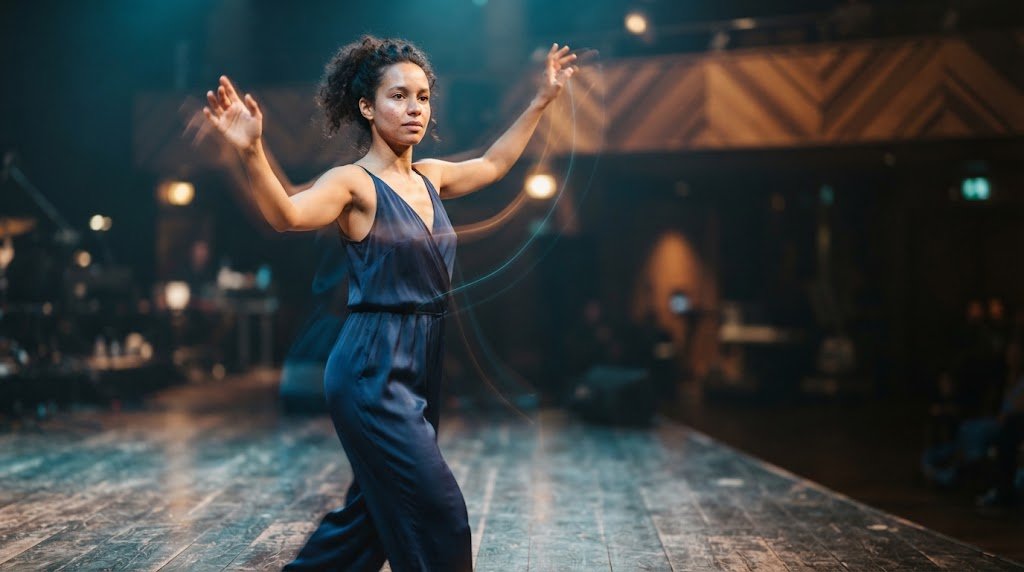
Pulsamento is a relatively uncommon term that has attracted attention because it can be used to describe the idea of a pulse, rhythmic movement, repeated vibration, or continuous flow. In simple terms, it refers to something that beats, pulses, or moves in a recurring pattern rather than remaining completely still.
The word is particularly interesting because its meaning can shift depending on context. It may be discussed in connection with music and rhythm, the human body’s natural pulse, movement and vibration, artistic expression, or metaphorical ideas about energy and flow. At the same time, it is important to recognize that pulsamento is not a universally standardized technical term in modern English, so its meaning should be interpreted according to the context in which it appears.
What Does Pulsamento Mean?
At its broadest, pulsamento can be understood as a sustained or recurring pulse. The central idea is repetition: something rises and falls, beats and relaxes, moves and returns, or produces a recognizable rhythmic pattern over time.
A heartbeat provides one of the easiest ways to understand the concept. Each contraction creates a pulse, and the repeated sequence produces an ongoing rhythm rather than an isolated event. In a similar way, a steady musical beat, repetitive movement, or rhythmic vibration can be described conceptually through the idea of pulsamento.
The term therefore has a broader meaning than simply “one pulse.” It emphasizes the continuity and character of pulsing and can suggest the way individual beats combine into an ongoing pattern. This is why the concept can be useful when discussing music, movement, bodily rhythms, or even metaphorical forms of activity.
The Origins of Pulsamento
The linguistic background of pulsamento is associated with the Latin family of words built around pulsare, a verb connected with beating, striking, or producing repeated movement. Related words such as pulse, pulsation, and Italian pulsazione preserve this basic idea of rhythmic beating or throbbing.
However, claims that pulsamento is a firmly established modern technical term in Italian, Spanish, or Portuguese should be treated carefully. The word does occur in historical and linguistic material, but contemporary sources frequently use related and more standardized terms such as pulsazione, pulse, pulsation, ritmo, or heartbeat instead. Historical Italian texts, for example, contain uses of pulsamento in descriptions of bodily pulsation.
This distinction is important because many modern online explanations present pulsamento as though it has one precise dictionary definition shared across music, medicine, science, and wellness. The evidence suggests a more nuanced picture: the word is connected to a genuine and much older linguistic idea, but its modern English usage is relatively loose and descriptive rather than being a universally recognized scientific category.
Pulsamento and the Idea of Rhythm
Rhythm is at the heart of the concept. A rhythm exists when events occur in an organized pattern through time, and a pulse provides the recurring reference point that helps people perceive that organization.
Pulsamento can therefore be used as a way of thinking about the ongoing movement behind a rhythm. Instead of focusing on one isolated beat, it draws attention to the continuity between beats and to the sense of forward motion that a repeating pattern creates.
This distinction can be particularly useful in artistic descriptions. A performance can have a technically correct tempo while still feeling stiff or lifeless, whereas another performance may create a strong sense of internal movement. In informal musical discussions, pulsamento can be used to describe this sense of rhythmic vitality, although more established music-theory terminology would normally refer to concepts such as pulse, meter, tempo, groove, accent, phrasing, and rhythm.
Pulsamento in Music
Music is one of the clearest contexts in which the idea of pulsamento makes intuitive sense. Musical pulse gives listeners and performers a sense of regular timing, allowing sounds to be organized into recognizable patterns.
When you tap your foot to a song, clap along with a beat, or instinctively move your body in time with music, you are responding to rhythmic organization. The underlying pulse helps musicians coordinate their playing and helps listeners anticipate when the next beat or rhythmic event is likely to occur.
In this sense, pulsamento can be thought of as the felt continuity of musical pulse. It is not necessarily the same thing as tempo, because tempo describes how quickly the pulse occurs, while the broader idea of pulsamento emphasizes the experience of recurring rhythmic movement.
A slow song can have a strong pulse, just as a fast song can have a weak or difficult-to-follow pulse. Musical expression can also manipulate the listener’s perception of pulse through accents, syncopation, pauses, dynamics, phrasing, and changes in rhythmic intensity.
Pulsamento and Musical Performance
For performers, a strong internal sense of pulse is essential for maintaining timing. A drummer, guitarist, pianist, singer, or dancer needs to understand where the recurring beat sits even when the music becomes complex.
This is especially important when several performers are working together. Each musician may play a different rhythm, but the group still needs a shared temporal framework that keeps the performance coordinated.
The concept also helps explain why rhythm can feel physical. Music is not perceived only through the ears; people frequently respond to rhythmic sounds through movement, such as nodding, tapping, walking, clapping, or dancing. Pulsamento, when used descriptively in this setting, captures that connection between repeated sound and bodily response.
Pulsamento in the Human Body
The human body provides another natural example of rhythmic activity. The heart contracts and relaxes repeatedly, breathing follows cycles of inhalation and exhalation, and many biological processes operate according to recurring patterns.
The pulse that can be felt at places such as the wrist or neck is produced by pressure waves associated with the heartbeat. This is a measurable physiological phenomenon, and medical professionals generally use precise terms such as heart rate, pulse, cardiac rhythm, and pulsation rather than relying on the less standardized word pulsamento.
That distinction matters. If someone encounters the word pulsamento while searching for information about a physical sensation, it should not automatically be interpreted as the name of a medical condition. The term is better understood as a broad description of rhythmic or pulse-like activity unless a particular source clearly defines it otherwise.
Is Pulsamento a Medical Term?
Pulsamento is not a standard medical diagnosis in English. Medical language normally uses more specific terms depending on what is being described, including pulse, heart rate, heartbeat, pulsation, arrhythmia, or palpitation.
This is an important point because online content sometimes gives ordinary descriptive words an appearance of medical authority. A word may sound scientific without actually representing a recognized medical condition or treatment.
If a person experiences an unusual heartbeat or pulsing sensation, the useful information for a healthcare professional is the actual symptom: whether the heart feels fast, slow, irregular, forceful, fluttering, or as though it is skipping beats. Clear medical terminology is much more useful than simply describing the sensation as “pulsamento.”
Pulsamento in Nature and Everyday Life
The basic idea of recurring movement can also be observed throughout the natural world. Waves move through repeated rises and falls, day and night alternate in a cycle, and many environmental processes show periodic or semi-periodic patterns.
Human activities also contain rhythms. Walking involves repeated movements, breathing follows a cycle, and daily routines often develop recognizable patterns over time.
Calling these examples pulsamento is generally a descriptive or metaphorical use, rather than a claim that all of these phenomena belong to one scientific category. The usefulness of the concept lies in recognizing that repetition and timing can give structure to movement, whether the movement is biological, mechanical, musical, or environmental.
Pulsamento in Art and Creative Expression
Artists frequently use rhythm to create a feeling of movement, tension, balance, or continuity. This applies not only to music but also to dance, visual art, film, photography, architecture, and digital design.
In visual work, for example, repeated shapes, lines, colors, or spaces can create a visual rhythm. In dance, repeated movements can establish a physical pulse that audiences perceive even without music.
In these contexts, pulsamento works best as an expressive concept rather than a strict technical measurement. It can describe the sense that an artwork has an internal beat or recurring movement that guides the viewer’s or listener’s attention.
Pulsamento and Technology
Modern technology also relies heavily on pulses and repeating signals. Computers, electronic devices, communication systems, sensors, and digital circuits can use timed electrical or electromagnetic signals to represent information and coordinate operations.
However, it would be misleading to suggest that engineers generally use “pulsamento” as a standard technical term for these systems. More precise terminology includes pulse signal, frequency, oscillation, waveform, clock signal, modulation, and periodicity.
The connection is therefore conceptual rather than necessarily terminological. A repeated signal has many of the characteristics associated with the broader idea of pulsamento: recurrence, timing, variation, and movement between different states.
Pulsamento vs. Pulse, Pulsation, Rhythm, and Tempo
Understanding related terms makes the meaning of pulsamento much clearer. A pulse is a recurring beat or a measurable bodily beat, while pulsation generally refers to rhythmic throbbing, beating, or periodic movement.
Rhythm is broader because it concerns the organization of events through time. Tempo, meanwhile, refers to the speed at which a musical pulse or rhythmic pattern occurs.
Pulsamento overlaps with all of these ideas but does not completely replace any of them. It is most useful as a descriptive word for the experience or continuity of pulsing, particularly when an author wants to emphasize movement, vitality, or an ongoing rhythmic character.
Why Is Pulsamento Sometimes Confusing?
One reason the term causes confusion is that it appears in online content with several different definitions. Some sources describe it primarily as a musical concept, while others connect it with health, mindfulness, energy, creativity, nature, or technology.
There is also a tendency for newer articles to present pulsamento as if it were a universally recognized discipline or scientific theory. Available evidence does not support treating it that way. The more reliable interpretation is that pulsamento is a context-dependent term associated with pulse, rhythm, and recurring movement, rather than a single standardized field of study.
How Is Pulsamento Used Today?
Today, the word is most likely to appear in descriptive, artistic, lifestyle, or online discussions where writers want to communicate the idea of rhythm and continuous movement. Its flexibility makes it attractive for writing about music, body awareness, creativity, movement, and patterns.
It can also function as a metaphor. Someone might describe a city as having a pulsamento of its own, referring to the recurring activity of people, traffic, commerce, lights, and sound.
This metaphorical use is understandable because rhythm is one of the most universal ways humans make sense of change over time. Whether the subject is a heartbeat, a drum pattern, or the activity of a busy city, the underlying image is similar: something repeatedly moves, changes, and returns.
Can Pulsamento Be Practiced?
Because pulsamento is not a standardized exercise system, there is no single official method for “practicing pulsamento.” However, people can certainly practice awareness of rhythm and pulse.
A musician might practice with a metronome, tap along with different tempos, or perform rhythmic patterns while maintaining a steady internal beat. A dancer can develop timing by moving consistently with music, while a listener can deliberately focus on identifying the underlying pulse of a song.
These activities can improve familiarity with rhythm and timing, but they should not be presented as a special medical or therapeutic treatment simply because they are described using the word pulsamento.
Why Does Pulsamento Matter?
The broader idea behind pulsamento matters because rhythm is fundamental to how humans experience sound, movement, and time. We recognize patterns partly by noticing repetition, and repeated patterns make complex experiences easier to organize and anticipate.
In music, pulse provides coordination. In the body, recurring biological processes support normal functioning. In technology, timed signals allow systems to communicate and operate. In art, repetition can create visual or emotional structure.
Pulsamento brings these examples together at the level of a simple idea: rhythmic movement creates a sense of continuity and organization.
Common Misconceptions About Pulsamento
One common misconception is that pulsamento has one universally accepted definition. In reality, its meaning varies considerably depending on the source and context.
Another misconception is that it is automatically a medical condition. It is not. When discussing health, it is better to use established terms such as pulse, heart rate, palpitation, or pulsation.
A third misconception is that every rhythmic phenomenon should technically be called pulsamento. In scientific and professional writing, more precise terminology is normally preferable. Pulsamento is most useful when the writer is explaining a general concept or describing the felt quality of rhythmic movement.
Frequently Asked Questions About Pulsamento
What is the simplest meaning of pulsamento?
The simplest meaning is a pulse, rhythmic movement, or recurring beat that continues over time. The exact interpretation depends on the context.
Is pulsamento a real word?
The word has historical and linguistic usage, including appearances in Italian-language material, but it is not a common standardized English technical term. Modern online usage often employs it broadly to describe pulse, rhythm, or continuous movement.
Is pulsamento a music theory term?
It can be used descriptively in discussions of music and rhythm, but it should not be confused with universally standardized music-theory terms such as pulse, meter, rhythm, and tempo.
Is pulsamento a medical condition?
No. Pulsamento is not a standard medical diagnosis. If you are describing an unusual physical sensation, use specific terms such as pulse, heartbeat, heart rate, or palpitation when communicating with a healthcare professional.
What is the origin of the word pulsamento?
Its linguistic family is connected with Latin pulsare, associated with beating or striking repeatedly, and with related Romance-language words concerning pulse and pulsation. Historical evidence also shows pulsamento used in Italian contexts.
How is pulsamento different from rhythm?
Rhythm describes the organization of events in time, while pulsamento is better understood as the broader idea or sensation of recurring pulse and movement. The two concepts overlap, particularly in music.
Final Thoughts on Pulsamento
Pulsamento is best understood as a flexible concept centered on pulse, repetition, rhythm, and continuous movement. Although the word is not a universally standardized English technical term, its underlying idea is familiar: the heartbeat that repeats, the musical beat that keeps moving, the wave that rises and falls, or the recurring motion that gives an experience its sense of flow.
Its origins connect it with a much older linguistic family surrounding pulsare, pulse, and pulsation, while its modern online use has expanded into music, art, body awareness, technology, and metaphorical descriptions of everyday life.
The most important point is to keep the context in mind. When precision matters, use established terms such as pulse, rhythm, pulsation, tempo, heart rate, or oscillation. When the goal is to describe the feeling of an ongoing rhythmic flow, however, pulsamento can serve as an evocative way of expressing the idea that something is continuously moving, beating, and creating structure through time.
