



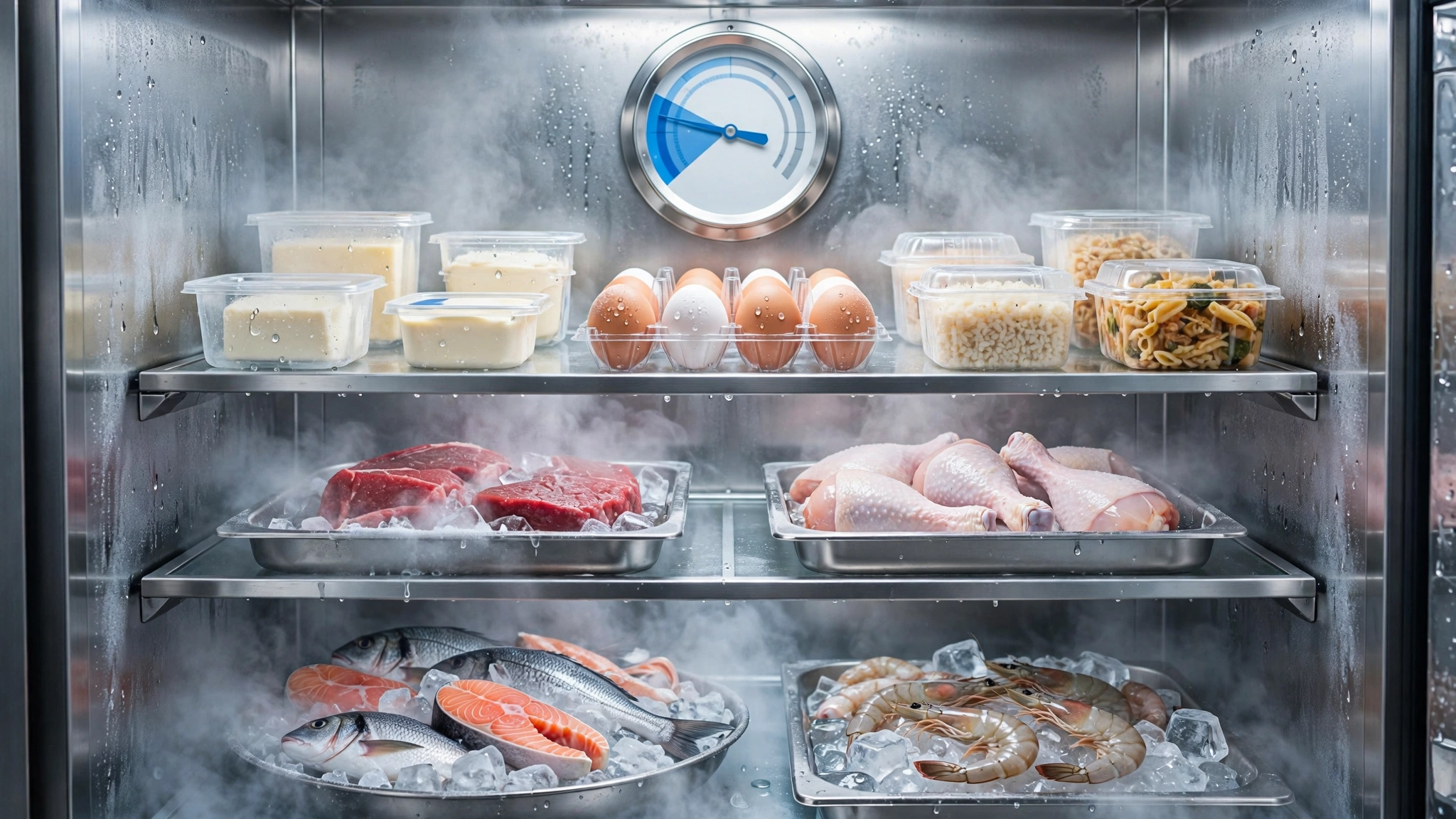
Food storage safety plays a major role in preventing foodborne illness and maintaining the quality of perishable foods. One of the most important principles of safe food storage is keeping refrigerated foods at 41°F (5°C) or below.
The 41°F rule helps slow the growth of many harmful microorganisms that can multiply when food is stored at warmer temperatures. Understanding this temperature requirement can help households, restaurants, cafeterias, and other food-service operations handle and store food more safely.
What Is the 41°F Rule?
The 41°F rule refers to maintaining refrigerated potentially hazardous foods at 41°F or below. This temperature is widely used in food-safety practices to help control the growth of bacteria and other microorganisms that may cause illness.
Keeping food cold does not necessarily destroy bacteria that are already present. Instead, refrigeration slows the rate at which many microorganisms grow, helping keep food safer during storage.
Temperature control is especially important for foods that contain moisture and nutrients that support bacterial growth. Meat, poultry, seafood, dairy products, eggs, cooked foods, and many prepared dishes are examples of foods that require careful temperature management.
Why Is 41°F Important for Food Safety?
Bacteria can multiply much more quickly when food is exposed to temperatures that allow favorable microbial growth. As refrigerated food becomes warmer, the conditions can become increasingly suitable for certain bacteria.
Maintaining food at or below 41°F creates a colder environment that slows the growth of many microorganisms. This gives food handlers greater control over food safety during storage and helps reduce unnecessary bacterial growth.
It is important to remember that temperature control is not the only food-safety requirement. Proper hygiene, sanitation, cooking, cooling, reheating, and prevention of cross-contamination are also essential.
Understanding the Food Temperature Danger Zone
Food safety practices often emphasize avoiding the temperature danger zone, which is the range of temperatures where many bacteria can grow rapidly. The specific range can vary depending on the food-safety standard being applied.
The 41°F refrigeration limit represents an important control point because keeping cold food at or below this temperature helps limit microbial growth.
When refrigerated foods are allowed to remain at warmer temperatures for extended periods, the risk of bacterial multiplication can increase. For this reason, monitoring both temperature and time is an important part of safe food storage.
Which Foods Should Be Stored at 41°F or Below?
Many perishable foods should be kept refrigerated at or below 41°F. These include raw and cooked meat, poultry, seafood, milk, cheese, yogurt, eggs, prepared foods, leftovers, and many ready-to-eat foods.
Foods that have been cut or prepared may also require refrigeration. Once certain fruits and vegetables are cut, their internal surfaces become exposed, which can increase opportunities for contamination.
Knowing which foods require refrigeration allows food handlers to make better storage decisions and reduce the possibility of foodborne illness.
How Refrigeration Helps Control Bacteria
Refrigeration slows many biological processes that microorganisms need to reproduce. By reducing the temperature of food, refrigeration can significantly slow the growth of numerous types of bacteria.
However, cold storage does not make contaminated food automatically safe. Some microorganisms can survive refrigeration, and certain foods may already contain harmful organisms before they enter the refrigerator.
For this reason, refrigeration should be combined with safe preparation and handling practices. Food should be cooked appropriately, protected from contamination, and stored correctly throughout its useful life.
Why Refrigerator Temperature Monitoring Matters
A refrigerator may appear to be working normally while its internal temperature is higher than expected. Frequent door openings, overcrowding, poor airflow, equipment problems, and power interruptions can all affect temperature.
Using a reliable appliance thermometer provides a practical way to verify the actual temperature inside a refrigerator. Checking the temperature regularly can help identify problems before they affect large quantities of food.
Commercial kitchens should have established procedures for temperature monitoring and documentation. Household refrigerators can also benefit from periodic temperature checks, especially when storing large amounts of perishable food.
The Risks of an Overcrowded Refrigerator
Overloading a refrigerator can interfere with the circulation of cold air. When food containers are packed tightly together, some areas may become warmer than others.
Uneven cooling can make it more difficult for the refrigerator to maintain consistent temperatures throughout its interior. Foods placed in warmer areas may therefore be exposed to conditions that are less suitable for safe storage.
Keeping reasonable space between food items allows cold air to circulate more effectively. Proper organization also makes it easier to locate foods quickly and minimize unnecessary door openings.
Proper Food Placement Inside the Refrigerator
Food placement can make an important difference in preventing cross-contamination. Raw meat, poultry, and seafood should be stored in sealed containers or positioned so their juices cannot drip onto ready-to-eat foods.
Prepared foods and foods that will be eaten without further cooking should be protected from raw ingredients. Covered containers can help prevent accidental contamination while also reducing exposure to odors and moisture loss.
A clean and organized refrigerator makes these practices easier to maintain. Good organization can also help food workers and household members identify older foods and manage storage more effectively.
How Quickly Should Perishable Food Be Refrigerated?
Perishable foods should not be left at room temperature unnecessarily. Prompt refrigeration helps minimize the amount of time food spends at temperatures that may support faster bacterial growth.
Large quantities of hot food can require special attention because they may cool slowly if placed in large, deep containers. Dividing food into smaller portions and using appropriate cooling methods can help food reach safe refrigeration temperatures more efficiently.
Food-service operations should follow their applicable food-safety regulations and established cooling procedures when handling cooked foods.
What Happens When Food Gets Above 41°F?
When refrigerated food rises above 41°F, bacterial growth may become more likely, depending on the food, temperature, and duration of exposure. The longer potentially hazardous food remains at an inappropriate temperature, the greater the food-safety concern can become.
Food that has been exposed to elevated temperatures may not show obvious signs of spoilage. Harmful microorganisms do not always change the smell, taste, color, or appearance of food.
This is why food safety should not be judged only by whether food looks or smells normal. Temperature records and proper time-and-temperature controls provide more reliable information for managing refrigerated foods.
Preventing Cross-Contamination During Food Storage
Temperature control alone cannot prevent every food-safety problem. Cross-contamination is another major concern when storing raw and ready-to-eat foods.
Bacteria can transfer from raw meat, poultry, seafood, or contaminated surfaces to foods that will not receive additional cooking. Keeping foods covered and separated can significantly reduce this risk.
Food handlers should also wash their hands properly and clean and sanitize food-contact surfaces. Safe storage is most effective when it is part of a complete food-safety system.
Food Storage Safety in Restaurants and Commercial Kitchens
Restaurants, cafeterias, catering operations, and other commercial kitchens often store significant quantities of perishable food. Maintaining appropriate refrigeration temperatures is therefore an essential part of daily food-safety management.
Commercial refrigerators should be monitored regularly to ensure they remain within the required temperature range. Employees should understand how to check temperatures and what actions to take when refrigeration equipment is not functioning correctly.
A refrigeration failure can potentially affect a large amount of inventory. Having clear procedures for responding to temperature problems can help businesses reduce waste and protect customers.
Safe Food Storage at Home
The 41°F rule is also useful for household food storage. A home refrigerator should be cold enough to keep perishable foods safely refrigerated without unnecessarily freezing foods that are not intended to be frozen.
Families can reduce food-safety risks by checking refrigerator temperatures, promptly storing leftovers, keeping raw foods separated from ready-to-eat foods, and maintaining a clean refrigerator.
It is also helpful to avoid repeatedly leaving the refrigerator door open. Limiting unnecessary door openings can help maintain a more stable internal temperature.
What to Do When a Refrigerator Becomes Too Warm
If a refrigerator temperature rises above the recommended limit, the situation should be investigated promptly. The cause may be a malfunctioning appliance, a power interruption, excessive door opening, or an overloaded refrigerator.
Food safety decisions should consider the type of food, the temperature reached, and how long the food was exposed to the warmer conditions. Commercial food establishments should follow their applicable food code and internal food-safety procedures.
When there is uncertainty about whether food has been safely stored, relying on established food-safety guidance is preferable to judging safety solely by appearance or smell.
Why Time and Temperature Work Together
Food storage safety depends on more than a single temperature reading. The amount of time food spends at an inappropriate temperature is also important.
A brief temperature fluctuation may have different implications from prolonged exposure to warmer conditions. Monitoring temperature consistently helps food handlers identify problems and respond before food remains outside safe conditions for too long.
This is why many food-safety programs emphasize time-and-temperature control. Keeping food cold and minimizing the time it spends at unsafe temperatures work together to reduce food-safety risks.
Maintaining a Safe Refrigerator
Regular refrigerator maintenance can help support consistent food storage temperatures. Door seals should remain intact, shelves should be kept clean, and the appliance should have adequate airflow.
Food should be arranged so that cold air can circulate around stored items. Excessive overcrowding can make it harder for the refrigerator to maintain a consistent temperature.
If a refrigerator repeatedly fails to maintain the required temperature, it may need professional inspection or repair. Continuing to store perishable foods in an unreliable refrigerator can create unnecessary food-safety risks.
Common Food Storage Mistakes to Avoid
One common mistake is assuming that a refrigerator is safe simply because it feels cold. Without a thermometer, it can be difficult to know the actual internal temperature.
Another mistake is storing raw foods above ready-to-eat foods. Leaking liquids can potentially contaminate foods stored underneath them.
Leaving leftovers or other perishable foods out for extended periods is another avoidable problem. Prompt refrigeration and proper storage can help reduce the opportunity for harmful microorganisms to multiply.
Frequently Asked Questions About the 41°F Rule
What is the safe refrigerator temperature for food?
For many food-service food-safety applications, refrigerated potentially hazardous foods should be maintained at 41°F (5°C) or below.
Does 41°F kill bacteria?
No. Refrigeration generally slows the growth of many bacteria rather than killing them. Proper cooking and other food-safety practices are still necessary.
Why should food be stored below 41°F?
Keeping food at or below 41°F helps slow the growth of many microorganisms that can cause foodborne illness or contribute to food spoilage.
Can food still be unsafe if it looks normal?
Yes. Harmful bacteria may not produce noticeable changes in food’s appearance, smell, or taste. Safe food handling should therefore rely on proper temperature and storage practices rather than appearance alone.
How can I check my refrigerator temperature?
A refrigerator thermometer can be used to monitor the internal temperature. Regular checks can help identify temperature problems that may not be obvious.
Final Thoughts on Food Storage Safety
The 41°F rule is an important principle in refrigerated food storage because maintaining a cold temperature helps slow the growth of many harmful microorganisms. Proper refrigeration can protect perishable foods while also helping maintain their quality and freshness.
Safe food storage requires more than simply placing food inside a refrigerator. Regular temperature monitoring, proper organization, separation of raw and ready-to-eat foods, prompt refrigeration, and good sanitation all contribute to effective food safety.
By understanding why the 41°F rule matters and incorporating reliable temperature-control practices into everyday food handling, households and food-service operations can take an important step toward reducing the risk of foodborne illness.
