



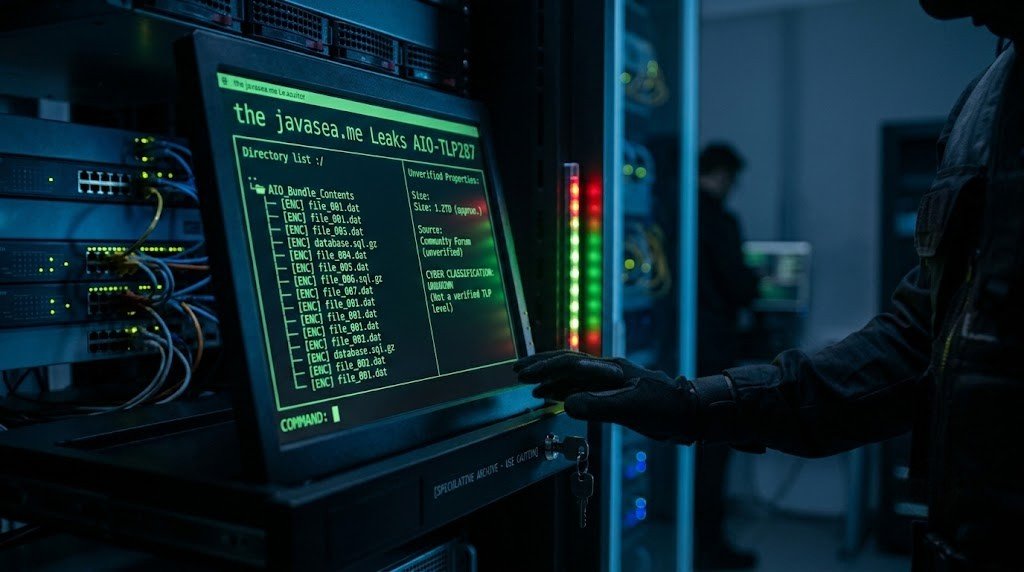
The phrase thejavasea.me Leaks AIO-TLP287 has become a frequently searched topic across technology blogs, forums, and cybersecurity discussions. Much of the online attention stems from claims about an alleged leak package, yet publicly available information remains limited and many widely repeated details have not been independently verified.
Rather than treating every online claim as fact, it is more useful to understand what the term generally refers to, why it has attracted interest, and what security lessons users can learn. Reports consistently note that the label is widely discussed, but there is no authoritative confirmation of the package’s exact contents or authenticity.
What Is thejavasea.me Leaks AIO-TLP287?
The expression typically combines three elements: thejavasea.me, the word Leaks, and the identifier AIO-TLP287. In many online communities, “AIO” is commonly interpreted as “All-In-One,” suggesting a bundled archive or collection of digital files.
The “TLP287” portion appears to function primarily as a release or package identifier. Despite speculation, there is no verified evidence that it represents an official cybersecurity classification or confirms the legitimacy of the alleged dataset.
Features Commonly Associated with AIO-TLP287
Discussions surrounding AIO-TLP287 often describe it as a large archive that allegedly combines multiple types of digital resources into a single package. Depending on the source, these descriptions mention credentials, archived documents, software files, scripts, or other digital assets.
However, these claims should be viewed cautiously. Independent cybersecurity researchers have not publicly verified the precise contents, scale, or origin of the alleged package, making it difficult to distinguish fact from repeated online speculation.
Why the Topic Has Gained Attention
Interest in thejavasea.me Leaks AIO-TLP287 has grown because leak-related stories often spread rapidly through blogs, forums, and social media. Search engine optimization has also contributed, with numerous websites publishing articles about the same topic using similar language.
As information is repeated across multiple sources, it can create the impression of widespread confirmation even when many articles ultimately trace back to the same unverified claims. This highlights the importance of relying on credible cybersecurity reporting rather than viral discussions alone.
Security Risks Associated with Alleged Leak Packages
One of the biggest dangers involves downloading files from unofficial or unknown sources. Cybercriminals frequently disguise malware as leaked databases, premium software, or exclusive archives in order to attract curious users.
Potential threats include ransomware, spyware, credential-stealing malware, remote access trojans, and malicious scripts. Even seemingly harmless compressed files may contain hidden executable code capable of compromising an entire system after extraction.
The Risk of Recycled or Fake Data
Not every leak advertised online represents newly compromised information. In many cases, older datasets from previous breaches are repackaged and distributed under new names to generate attention.
This practice can create unnecessary concern while making it difficult for researchers to determine whether a genuinely new breach has occurred. Users should therefore avoid assuming that every advertised leak reflects a recent cybersecurity incident.
Privacy, Legal, and Ethical Considerations
Leaked information often contains data that was never intended for public distribution. Accessing, sharing, or redistributing such material may violate privacy rights, contractual obligations, or applicable laws depending on the jurisdiction.
Beyond legal considerations, distributing unauthorized information can further harm affected individuals and organizations. Responsible cybersecurity practice emphasizes protecting privacy rather than encouraging the circulation of compromised data.
Potential Impact on Individuals
If personal information is included in any genuine data breach, affected users may face increased risks of phishing, identity theft, credential stuffing, or unauthorized account access.
Attackers frequently use exposed email addresses and passwords to attempt logins across multiple online services, particularly when individuals reuse the same password for different accounts. This is why strong password hygiene remains one of the most effective security measures.
Potential Impact on Organizations
Organizations associated with confirmed data breaches may experience financial losses, reputational damage, regulatory scrutiny, and operational disruption. Incident response efforts often require extensive forensic investigations, customer notifications, and infrastructure improvements.
Even rumors of a breach can create confusion, making accurate communication and transparent investigations essential to maintaining public trust.
How to Protect Yourself
Whether or not a specific leak proves authentic, adopting strong cybersecurity habits significantly reduces personal risk. Use unique passwords for every account, enable multi-factor authentication wherever available, keep operating systems and applications updated, and remain cautious when downloading files from unknown websites.
Users should also monitor important accounts for unusual login activity, unexpected password reset emails, or unfamiliar devices. Taking preventive action early is far safer than responding after an account has been compromised.
Separating Facts from Speculation
The most important takeaway is that thejavasea.me Leaks AIO-TLP287 remains a topic surrounded by substantial online speculation. While the phrase is widely discussed, publicly available evidence does not conclusively verify many of the specific claims repeated across blogs and forums.
Approaching such topics with a critical mindset helps prevent misinformation from spreading and encourages decisions based on verified evidence rather than online rumors.
Conclusion
The discussion surrounding thejavasea.me Leaks AIO-TLP287 reflects broader concerns about digital privacy, cybersecurity, and the rapid spread of unverified information online. Although the term has attracted considerable attention, many claims about its contents and significance remain unconfirmed.
Instead of focusing on alleged leak packages, individuals and organizations should prioritize proactive security practices, including strong authentication, regular software updates, careful handling of suspicious downloads, and awareness of phishing threats. These measures provide meaningful protection regardless of whether any particular online leak ultimately proves to be genuine.
